A bathroom does not need a huge renovation budget to feel cleaner, more comfortable, and more modern. In fact, some of the most effective bathroom ideas are surprisingly simple: changing the lighting, improving storage, updating tired fixtures, or choosing a better layout can make a noticeable difference without completely rebuilding the room.
The challenge is knowing where to spend money and where to save it. A beautiful bathroom can quickly become expensive when you start adding new flooring, furniture, a bath, shower fittings, mirrors, lighting, and accessories. On the other hand, choosing the cheapest option for everything can leave you with a space that looks unfinished or becomes difficult to maintain.
This guide focuses on practical bathroom improvements that work in real homes. Whether you are planning a complete renovation, refreshing a dated bathroom, or simply looking for affordable ways to make the space look better, you will find ideas for layout, storage, colour, lighting, baths, materials, and finishing touches. The goal is not to follow a particular trend, but to create a bathroom that looks good, functions well, and makes sensible use of your budget.
What Makes a Good Bathroom Design?
A successful bathroom balances three things:
- Functionality
- Comfort
- Appearance
It is easy to concentrate on appearance because tiles, mirrors, colours, and fittings are the most visible elements. However, a bathroom that looks impressive but has nowhere to store towels or makes it difficult to move around will quickly become frustrating.
Before choosing products or colours, think about how the room is actually used.
Ask yourself:
- Who uses the bathroom?
- Is it mainly used for quick showers or longer baths?
- Where will toiletries be stored?
- Is there enough space around the toilet, basin, bath, and shower?
- Does the room receive natural light?
- Which existing features are worth keeping?
These questions can prevent expensive decisions that look good on paper but do not work in everyday life.
Budget-Friendly Bathroom Ideas That Make a Big Difference
You do not necessarily need to replace everything to transform a bathroom.
Refresh the Walls
One of the easiest ways to change the character of a bathroom is to update the wall colour.
Light neutral shades can make a compact bathroom feel more open, while darker colours can create a more dramatic atmosphere when used carefully.
If you already have attractive tiles, you may not need to remove them. Painting suitable non-tiled surfaces can provide a relatively inexpensive visual refresh.
Upgrade the Mirror
A mirror is both practical and decorative.
Instead of choosing a basic rectangular mirror simply because it fits, consider how its shape interacts with the rest of the room.
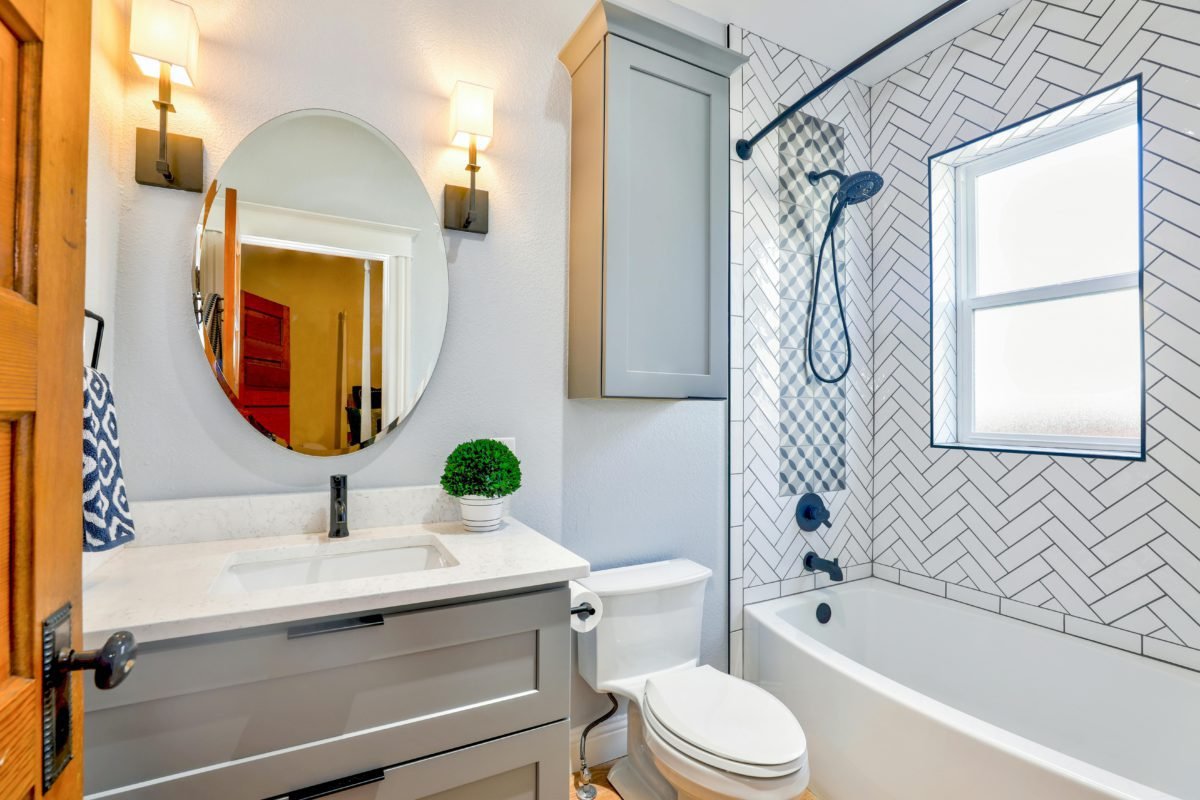
Round mirrors can soften rooms containing lots of straight lines, while larger rectangular mirrors can help reflect more light.
For smaller bathrooms, a well-positioned mirror can also make the room feel considerably more spacious.
Improve the Lighting
Poor lighting can make even a well-designed bathroom feel dull.
Consider using different layers of lighting rather than relying on a single ceiling fixture.
For example:
- General ceiling lighting for the whole room
- Focused lighting around the basin
- Softer lighting for a relaxing atmosphere
- Practical illumination around storage areas
The aim is to make the bathroom functional in the morning while still comfortable in the evening.
Choosing the Right Bath
For households that enjoy relaxing baths, the bath can become the centrepiece of the room.
The right choice depends on available space, plumbing arrangements, household needs, and your preferred style.
Freestanding Baths
Freestanding baths can create a strong focal point and work particularly well in larger bathrooms.
However, they require careful planning because the surrounding space needs to be considered.
A freestanding design can look beautiful, but squeezing one into a small room may make the bathroom feel cramped.
Straight Baths
Straight baths are among the most practical options for many homes.
They can fit neatly against a wall and make efficient use of limited floor space. Their familiar shape also makes them relatively easy to incorporate into conventional bathroom layouts.
If you are working with a strict budget, comparing cheap baths online can be a practical starting point before deciding which style and dimensions best suit your room.
Shower Baths
A shower bath can provide flexibility when you want both bathing and showering facilities but do not have enough room for separate units.
This can be especially useful in family bathrooms.
The important consideration is the shape of the bath and shower area. A design that gives you more comfortable showering space may be worth choosing even if another model initially looks more attractive.
Small Bathroom Ideas
Small bathrooms require more planning because every centimetre matters.
Use Vertical Storage
When floor space is limited, look upward.
Tall cabinets, wall-mounted storage, shelving, and mirrored cabinets can provide useful storage without taking up as much floor area.
Keep frequently used items within easy reach and store less frequently used products higher up.
Choose Wall-Mounted Furniture
Wall-mounted basins and storage units can create more visible floor space beneath them.
This can make a compact bathroom feel less crowded and also makes cleaning the floor easier.
Keep the Colour Scheme Simple
Too many contrasting colours can make a small room feel visually busy.
A restrained palette can create a cleaner appearance.
You do not have to make everything white. Soft grey, beige, muted green, warm cream, and other subtle shades can work well while maintaining a sense of openness.
Bathroom Storage Ideas That Actually Work
Storage is often overlooked during bathroom planning.
A room may look tidy on renovation day, but everyday life introduces toiletries, towels, cleaning products, cosmetics, toilet rolls, and other essentials.
Use Hidden Storage
A mirrored cabinet can combine two functions in one area.
Similarly, vanity units can hide everyday products while keeping the countertop relatively clear.
Add Small Organisers
You do not necessarily need expensive built-in furniture.
Simple containers can divide drawers and cabinets into practical sections.
Group products according to how they are used rather than simply placing everything together.
For example:
- Daily skincare
- Hair products
- Dental care
- Bath products
- Cleaning supplies
This small change can make a bathroom feel much more organised.
Modern Bathroom Ideas Without Overdoing Trends
Modern bathroom design does not have to mean copying the latest showroom.
A better approach is to choose a few contemporary features while keeping the main design relatively timeless.
Combine Modern and Traditional Elements
For example, a classic bath can work alongside contemporary lighting and modern storage.
This creates a bathroom that feels current without making every element dependent on a short-lived trend.
Use Natural-Looking Materials
Wood-effect finishes, stone-inspired surfaces, warm neutral colours, and natural textures can create a calmer atmosphere.
The advantage of these styles is that they can often remain attractive even when particular trends change.
How to Make a Bathroom Feel More Expensive
You can create a more premium appearance without spending heavily on every component.
Focus on the Details
Small details can influence how finished a bathroom feels.
Consider:
- Matching hardware finishes
- Quality-looking taps
- A coordinated mirror
- Neat towel storage
- Consistent accessories
- Good lighting
- Clean lines
The important point is consistency.
A bathroom with inexpensive individual components can still look polished when the finishes work together.
Bathroom Flooring Ideas
Bathroom flooring needs to look good, but appearance should not be the only consideration.
Think about:
- Water resistance
- Cleaning requirements
- Slip resistance
- Durability
- Installation
- Compatibility with underfloor heating, if applicable
Large-format tiles can reduce the number of visible grout lines and may create a cleaner visual effect.
However, smaller tiles can sometimes provide more flexibility around awkward shapes.
The best flooring is therefore not necessarily the most fashionable option. It is the one that suits the room’s practical demands.
Common Bathroom Planning Mistakes
Mistake 1: Measuring Only the Main Fixtures
A bath may technically fit into a room, but that does not mean the overall layout works.
Always consider the space needed to move around each fixture.
Mistake 2: Forgetting Storage
A beautiful bathroom with insufficient storage quickly becomes cluttered.
Plan storage before the renovation rather than trying to squeeze cabinets into leftover space afterward.
Mistake 3: Choosing Appearance Over Maintenance
Some finishes look fantastic but require constant cleaning.
Before committing to a particular surface, consider how much maintenance you are realistically willing to do.
Mistake 4: Following Trends Too Closely
Bathroom renovations can last for many years.
If every major feature reflects a short-lived trend, the room may look dated sooner than expected.
Use accessories and smaller details for trends while keeping expensive permanent elements more timeless.
Mistake 5: Ignoring Ventilation
Bathrooms produce considerable moisture.
Good ventilation is important for comfort and for reducing problems associated with persistent humidity.
If you are renovating, ventilation should be considered alongside lighting, plumbing, storage, and decoration rather than treated as an afterthought.
How to Plan a Bathroom Renovation Step by Step
A structured approach can make the process considerably easier.
Step 1: Measure the Room
Record the dimensions and positions of doors, windows, existing plumbing, and important fixed features.
Step 2: Decide What Must Change
Separate essential improvements from cosmetic ones.
For example:
Essential:
- Damaged fittings
- Poor ventilation
- Plumbing problems
- Insufficient lighting
Cosmetic:
- Colour
- Accessories
- Mirror
- Decorative finishes
Step 3: Set a Realistic Budget
Leave some room for unexpected expenses.
Older bathrooms can reveal hidden plumbing, structural, or installation issues once work begins.
Step 4: Choose the Main Fixtures
Select the bath, shower, basin, toilet, and storage before spending heavily on decorative elements.
These components determine much of the room’s layout.
Step 5: Build the Style Around Them
Once the main fixtures are chosen, select colours, tiles, lighting, mirrors, and accessories that complement them.
This is usually easier than choosing decorative elements first and attempting to make everything else fit afterward.
Three Practical Insights Many Bathroom Guides Miss
The Cheapest Purchase Is Not Always the Cheapest Solution
Price should be considered alongside durability, installation, maintenance, and replacement costs.
A slightly better product that lasts considerably longer can represent better value than repeatedly replacing a cheaper option.
Layout Often Matters More Than Decoration
Changing the position or proportions of fixtures can improve a bathroom more dramatically than changing its colour.
If the room feels cramped, buying new accessories will not solve the underlying problem.
Design for the Messiest Normal Day
A bathroom should not only look good when everything is perfectly arranged.
Think about how it behaves when towels are hanging, toiletries are being used, and several people are preparing for work or school.
If the room still functions well under those conditions, the design is doing its job.
FAQ
What are the best bathroom ideas for a small space?
The most useful ideas include wall-mounted storage, large mirrors, vertical cabinets, simple colour schemes, and carefully planned fixture placement. A shower bath can also provide both bathing and showering without requiring separate spaces. The key is to protect movement around the main fixtures and avoid unnecessary visual clutter.
How can I make my bathroom look expensive on a budget?
Focus on consistency rather than buying the most expensive products. Coordinated hardware, good lighting, a well-chosen mirror, tidy storage, and a restrained colour palette can make a significant difference. It is usually better to spend more carefully on a few visible or frequently used features than to upgrade everything equally.
What type of bath is best for a small bathroom?
A straight bath is often practical because it can sit neatly against a wall and make efficient use of the available floor space. A shower bath can be particularly useful when the household needs both bathing and showering facilities. The best choice ultimately depends on the room dimensions and the amount of surrounding clearance.
How do I plan a bathroom renovation without overspending?
Start by measuring the room and identifying essential work before choosing decorative finishes. Set a budget for major fixtures, installation, materials, and unexpected costs. Comparing products carefully and deciding where quality matters most can prevent unnecessary spending.
Should bathroom design follow current trends?
Trends can provide inspiration, but permanent bathroom features are usually better kept relatively timeless. You can introduce current styles through mirrors, accessories, colours, lighting, and other elements that are easier to replace. This approach makes it easier to refresh the bathroom later without another major renovation.
Conclusion
The best bathroom ideas are not necessarily the most expensive or fashionable. A successful bathroom is one that fits the available space, supports everyday routines, provides enough storage, uses suitable materials, and feels comfortable to spend time in.
Start with the layout and essential fixtures, then work toward lighting, storage, colour, flooring, and decorative details. If you are shopping for a bath, compare dimensions, style, installation requirements, and long-term value rather than choosing based solely on the headline price.
Most importantly, design the room for real life. A bathroom that remains practical when the shelves are full, towels are being used, and everyone is in a hurry will ultimately be far more satisfying than one designed only to look impressive.