
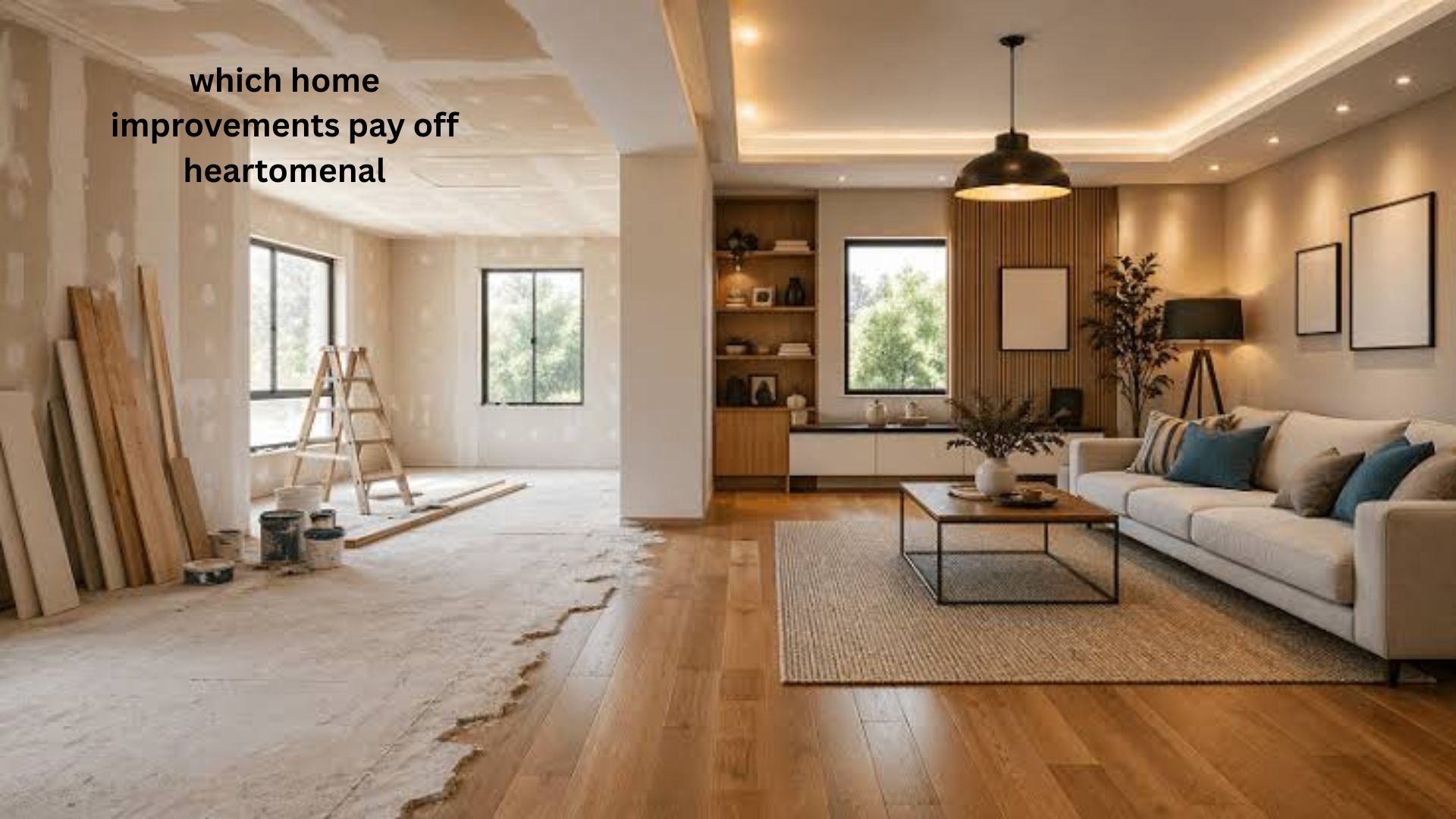
If you have ever stood in your kitchen, looked around, and wondered whether a renovation would actually be worth the money, you are not alone. Home improvements can make a property more comfortable and attractive, but some projects add far more practical and financial value than others. That is why understanding which home improvements pay off heartomenal matters before you start spending.
The smartest approach is not necessarily to choose the most expensive upgrade. In many cases, relatively simple improvements—better maintenance, improved energy efficiency, refreshed kitchens, updated bathrooms, and stronger curb appeal—can produce a better balance of cost, comfort, and resale appeal than a complete luxury renovation.
This guide looks beyond fashionable upgrades and focuses on how homeowners can decide where their money is most likely to work. It also explains which projects can disappoint, how to judge return on investment, and why the best improvement for your home may not be the one with the highest resale percentage.
What Does “Paying Off” Really Mean?
When people ask which home improvements pay off, they often mean one thing: Will I get my money back when I sell?
That is important, but it is not the whole picture.
A home improvement can pay off in at least four different ways:
- Resale value: The property becomes more attractive to future buyers.
- Energy savings: Monthly heating, cooling, or electricity costs fall.
- Maintenance savings: You avoid expensive repairs later.
- Daily enjoyment: The home becomes easier and more pleasant to live in.
For example, replacing a failing roof may not create the same excitement as installing a designer kitchen. Yet a sound roof protects the entire property and removes a major concern for buyers.
This leads to an important principle: the best renovation is usually the one that solves a real problem before adding decoration.
The Home Improvements Most Likely to Pay Off
There is no universal return percentage because labor costs, property values, climate, neighborhood expectations, and buyer preferences vary considerably. Still, several categories consistently make sense when approached carefully.
1. Fix Maintenance Problems First
Before thinking about a new backsplash or luxury bathroom, look at the condition of the house itself.
Prioritize problems such as:
- Roof leaks
- Water intrusion
- Damaged siding
- Poor drainage
- Faulty electrical systems
- Plumbing problems
- Rotting wood
- Old or failing heating and cooling equipment
- Broken windows and exterior doors
This is one of the least glamorous parts of renovation, but it can be one of the most financially sensible.
A buyer may overlook an outdated countertop. They are much less likely to overlook evidence of water damage or a roof nearing the end of its life.
Practical rule: If an improvement prevents deterioration, move it toward the top of your list.
2. Improve Curb Appeal
The exterior establishes expectations before someone enters the house.
You do not necessarily need expensive landscaping. Often, the goal is simply to make the property look maintained.
Useful upgrades include:
- Repainting a tired front door
- Replacing outdated exterior lighting
- Updating house numbers
- Cleaning siding and walkways
- Trimming overgrown landscaping
- Repairing damaged fencing
- Refreshing mulch or planting beds
- Replacing a visibly worn garage door
One advantage of exterior improvements is that they can benefit both homeowners and potential buyers immediately.
A neglected exterior can make people assume there are bigger problems inside. A clean, maintained exterior creates the opposite impression.
3. Make a Kitchen Better—Not Necessarily Bigger
Kitchen renovations are often where homeowners overspend.
A complete kitchen replacement can involve cabinets, appliances, plumbing, electrical work, flooring, countertops, and structural changes. The final bill can become enormous very quickly.
A more controlled approach is often to improve the existing layout.
Consider:
- Repainting or refinishing cabinets
- Replacing cabinet hardware
- Updating worn countertops
- Installing a better sink and faucet
- Improving task lighting
- Replacing visibly outdated appliances
- Repairing damaged flooring
- Adding a simple, durable backsplash
The key is to ask whether the kitchen is genuinely dysfunctional.
If the layout already works, spending heavily to move the sink, refrigerator, or walls may not produce enough additional value to justify the disruption.
4. Refresh the Bathroom
Bathrooms are another area where small changes can create a noticeable improvement.
A dated bathroom does not automatically require demolition.
Depending on its condition, you might update:
- Vanity
- Mirror
- Lighting
- Faucet
- Shower fixtures
- Grout
- Flooring
- Paint
- Storage
If the plumbing and layout are already practical, preserving them can significantly reduce renovation costs.
There is also an important distinction between replacement and repair. If a bathtub is structurally sound but looks tired, refinishing may make more financial sense than replacing the entire bathroom.
Energy Efficiency: The Value You Cannot Always See
One of the more overlooked categories of home improvement is energy efficiency.
Homeowners often concentrate on visible upgrades because they are easier to appreciate. However, improvements that reduce ongoing operating costs can be valuable long after the renovation is finished.
Potential projects include:
- Attic insulation
- Air sealing
- Efficient windows where existing ones are genuinely poor
- Weatherstripping
- Efficient heating and cooling equipment
- Programmable or smart thermostats
- Improved ventilation
- Energy-efficient lighting
The important lesson is to avoid buying efficiency simply because a product is labeled “efficient.”
First identify where your home is losing energy.
For example, adding insulation to a poorly insulated attic may solve a meaningful problem. Replacing perfectly serviceable windows with expensive premium windows may produce a much smaller financial benefit.
The improvement should follow the problem—not the other way around.
The Hidden ROI of Better Functionality
Here is an insight that is easy to miss: buyers do not only pay for finishes; they pay for fewer problems.
Imagine two homes with similar kitchens.
Home A has expensive marble counters but almost no storage.
Home B has ordinary countertops but excellent cabinets, a sensible pantry, good lighting, and enough workspace.
Many homeowners would assume Home A is more valuable because the materials look expensive. In everyday life, however, Home B may be much easier to live in.
Functional improvements can include:
- Built-in storage
- Better closet organization
- Pantry shelving
- Laundry-room storage
- Improved entryway organization
- Better lighting
- More accessible switches and outlets
- Practical workspace
This is one of the strongest ways to think about renovation: make the house easier to use before making it more impressive to look at.
Which Projects Often Have Poorer Financial Returns?
Not every worthwhile improvement is a good investment.
Some projects are highly personal. They can be excellent choices if you plan to stay for years, but risky if you expect to sell soon.
Swimming Pools
A pool can dramatically improve enjoyment in the right climate and for the right household.
But it also introduces maintenance, insurance, safety considerations, and ongoing costs. Some buyers will see it as a dream feature; others will see it as a major responsibility.
If you build one, do it primarily because you want to use it—not because you expect the entire construction cost to appear in your eventual sale price.
Extremely Personalized Rooms
A dedicated hobby room, luxury wine cellar, recording studio, or highly specialized workspace may be perfect for one owner and irrelevant to another.
The more specialized the renovation, the smaller the group of future buyers who will value it exactly as you do.
Flexible spaces are generally safer.
Overly Expensive Kitchens
There is a point where additional spending stops producing proportional value.
A high-quality kitchen can be a smart improvement. But if comparable homes in your neighborhood have modest kitchens, installing an ultra-luxury kitchen may mean spending far beyond what the local market supports.
This is called over-improving for the neighborhood.
Your home should generally make sense alongside nearby properties.
Three Overlooked Insights About Renovation ROI
Insight #1: The Best ROI May Come From Avoiding a Loss
Homeowners often think about how much an upgrade adds.
But sometimes the real financial benefit is preventing a buyer from discounting the property.
A repaired roof, dry basement, functioning HVAC system, and properly maintained exterior may not create a dramatic “wow” reaction. They can, however, prevent negotiations from becoming much more expensive.
In other words, protecting existing value can be just as important as creating new value.
Insight #2: Renovation Timing Matters
The best project changes depending on when you expect to sell.
If you are staying for ten years, you can reasonably prioritize comfort and long-term durability.
If you expect to sell within twelve months, avoid projects that take years to recover their value.
A simple decision framework is:
Long stay: comfort + durability + efficiency
Medium stay: functionality + maintenance + broad appeal
Short stay: repairs + presentation + buyer-friendly updates
Insight #3: A Smaller Project Can Create a Bigger Perceived Difference
Renovation value is not always proportional to renovation cost.
Replacing five outdated light fixtures, repainting several rooms, cleaning the exterior, and updating cabinet hardware might transform how a home feels without requiring a major construction project.
That matters because buyers evaluate the overall impression of a property, not the number of dollars you personally spent renovating it.
How to Decide Whether a Project Is Worth Doing
Before approving any renovation, ask yourself these seven questions:
- What problem does this project solve?
- How much will the complete project cost?
- Will it reduce future maintenance?
- Will it reduce monthly operating costs?
- Would an average buyer appreciate it?
- Is it appropriate for homes in my neighborhood?
- How long do I expect to live here?
If you cannot clearly answer the first question, pause.
A renovation without a defined purpose is often where budgets start drifting.
A Simple Way to Prioritize Your Budget
If you have $20,000 available, do not automatically spend all $20,000 on one project.
A more balanced strategy might be:
First: Deal with urgent maintenance and structural problems.
Second: Address energy loss and expensive operating problems.
Third: Improve the kitchen or bathroom if they are visibly dated or poorly functioning.
Fourth: Improve curb appeal and general presentation.
Finally: Spend remaining money on personal design preferences.
This approach protects the house before decorating it.
Common Home Improvement Mistakes
Chasing Trends
A design can look fantastic today and dated surprisingly quickly. Neutral, durable materials usually provide more flexibility than highly fashionable finishes.
Ignoring the Neighborhood
A renovation should fit the market around it. A $100,000 kitchen in a neighborhood where comparable homes sell for modest prices may be difficult to recover.
Choosing the Cheapest Contractor
The lowest quote is not automatically the best deal.
A poorly completed project can create repair costs, delays, and resale problems that overwhelm the initial savings.
Compare experience, scope, materials, references, warranties, and communication—not just the final number.
Forgetting the Hidden Costs
Homeowners often budget for materials and labor but forget permits, disposal, temporary accommodation, unexpected repairs, and changes discovered after demolition.
A renovation budget should include a contingency rather than assuming everything will go perfectly.
Renovating Without a Long-Term Plan
Changing one room today and another six months later can create inconsistent finishes and duplicate work.
Think about how major projects connect before starting them.
Real-Life Example: Two Ways to Spend $25,000
Imagine a homeowner has $25,000 available.
Option A: One Luxury Upgrade
They spend the entire amount on a high-end kitchen makeover with premium finishes.
The kitchen looks spectacular, but the roof is aging, the entry looks neglected, and the home’s insulation is poor.
Option B: Spread the Investment
They repair exterior problems, improve insulation, refresh the kitchen, update lighting, and improve the entrance.
Option B may not create one spectacular room, but it can improve the home’s condition, comfort, appearance, and buyer appeal simultaneously.
That is the central lesson behind which home improvements pay off heartomenal: value is often created by making the whole property stronger rather than making one room extraordinary.
FAQ
Which home improvements add the most value?
Maintenance, curb appeal, sensible kitchen and bathroom updates, and energy-efficiency improvements are generally among the strongest categories to consider. However, actual returns depend heavily on local property values, labor costs, and the condition of the existing home. A well-chosen repair can sometimes be more valuable than an expensive cosmetic renovation.
What home improvements should I avoid before selling?
Avoid highly personalized projects or luxury upgrades that are far beyond the standard of nearby homes. Specialized rooms, very expensive finishes, and major additions can be difficult to recover financially if buyers do not share your preferences. Before starting, compare your planned renovation with recently sold properties in the same area.
Is a kitchen remodel worth it for resale?
A kitchen update can be worthwhile, particularly when the existing kitchen looks dated or has functional problems. A moderate refresh is often less financially risky than completely changing the layout and installing the most expensive available materials. The goal should be a kitchen that looks current, works well, and fits the property’s market.
Do energy-efficient home improvements increase property value?
They can, especially when they reduce noticeable operating costs or solve an obvious comfort problem. Insulation, air sealing, efficient heating and cooling, and other improvements may also make the home more attractive to buyers who are concerned about future utility expenses. However, the financial return depends on the home’s starting condition and local energy costs.
Should I renovate for myself or for future buyers?
If you plan to stay for many years, your own comfort should matter significantly. If selling soon is the priority, choose improvements with broad appeal and avoid highly personalized designs. The best compromise is usually to improve functionality and quality while keeping major finishes relatively timeless.
What is the biggest mistake homeowners make when renovating?
The biggest mistake is often focusing on appearance before condition and function. A beautiful kitchen cannot compensate for serious moisture, structural, roofing, electrical, or drainage problems. Start with the house’s fundamentals, then invest in improvements that make it more attractive and easier to live in.
Conclusion
Knowing which home improvements pay off heartomenal is less about finding one magical renovation and more about making disciplined choices.
Start with maintenance. Protect the structure and major systems. Improve energy efficiency where there is a genuine opportunity to save money. Then consider moderate kitchen and bathroom updates, curb appeal, lighting, storage, and other improvements that make the home easier to live in.
Most importantly, do not confuse expensive with valuable.
A $40,000 renovation is not automatically better than a $10,000 one. The strongest improvement is the one that solves a real problem, suits the neighborhood, fits your timeline, and provides benefits you can actually use.
If you are planning your next project, walk through your home with a notebook before contacting a contractor. Write down what is broken, what is inefficient, what looks dated, and what genuinely makes everyday life harder. That simple exercise can help you spend your renovation budget where it matters most.