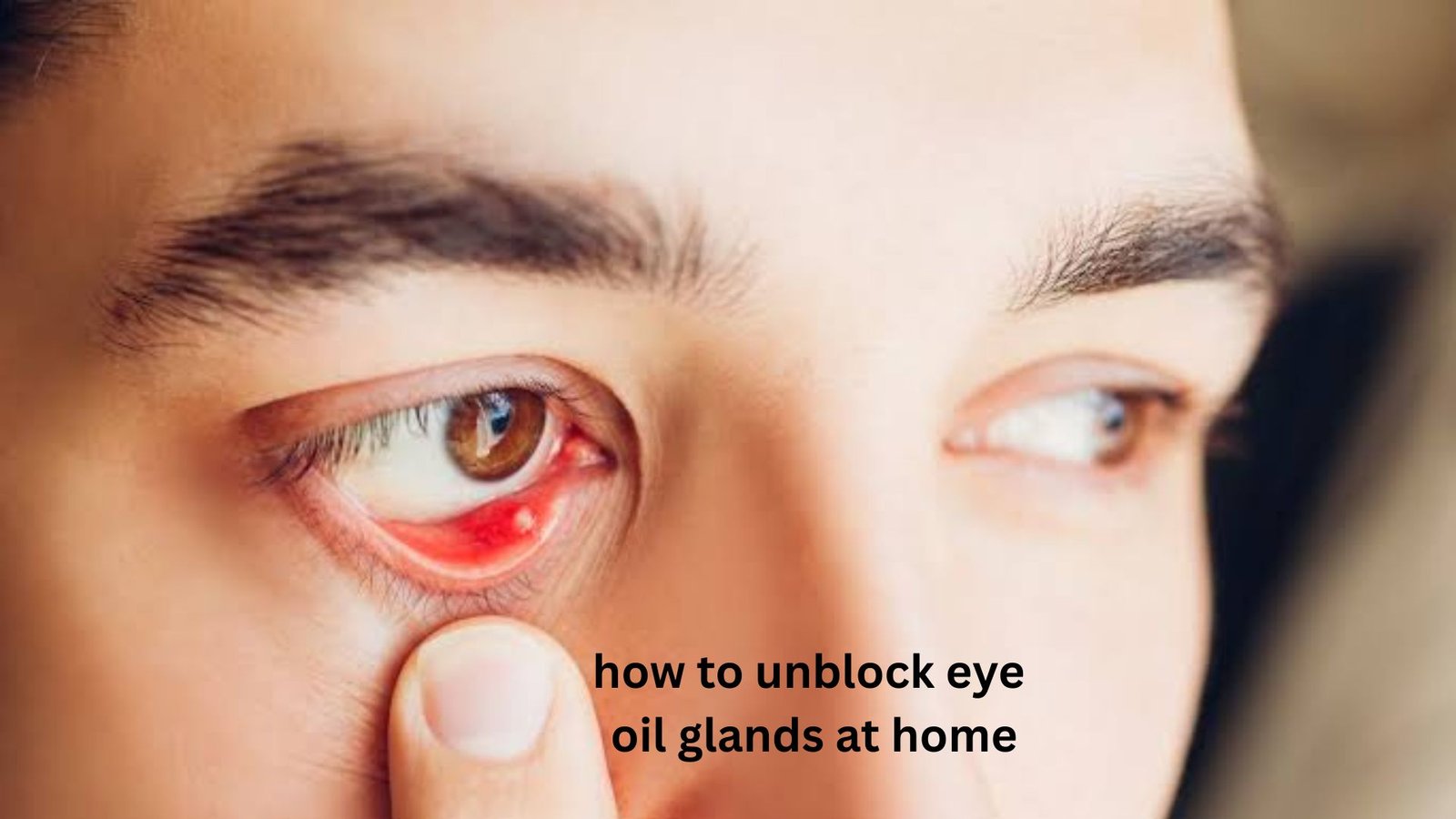
If your eyes often feel gritty, irritated, watery, or strangely dry even though they produce plenty of tears, blocked oil glands may be part of the problem. The tiny glands along your eyelids, called meibomian glands, release an oily substance that slows tear evaporation. When their openings become clogged or the oil becomes thick, the tear film can become unstable.
The good news is that mild blockage can often be managed at home with a simple, consistent routine. Warm compresses, gentle eyelid massage, and careful lid hygiene are the main approaches used to encourage the glands to flow more normally. However, there is an important distinction between gently supporting the glands and trying to physically squeeze a blockage out.
This guide explains how to unblock eye oil glands at home, what actually helps, what to avoid, and when home treatment is no longer enough. It also covers practical details such as how warm the compress should be, how long to use it, and why consistency usually matters more than applying intense pressure.
Important: This article is general health information, not a diagnosis. Persistent eye pain, significant redness, vision changes, light sensitivity, swelling, discharge, or an eye injury should be assessed by an eye-care professional promptly.
What Are Eye Oil Glands?
The oil glands people usually mean are the meibomian glands. They sit inside the upper and lower eyelids and release an oily material called meibum through tiny openings near the eyelash line.
Their main job is to form the outer oily layer of the tear film. This helps keep tears on the surface of the eye for longer.
When the glands do not release enough healthy oil, tears can evaporate too quickly. This may contribute to symptoms such as:
- Dry or burning eyes
- A gritty or sandy sensation
- Redness around the eyelids
- Watery eyes
- Blurred vision that comes and goes
- Eyelid irritation
- Crusting around the eyelashes
- Feeling as though something is in the eye
A common misconception is that watery eyes automatically mean the eyes are adequately lubricated. In reality, excessive watering can occur when the eye surface becomes irritated by an unstable tear film.
Can You Unblock Eye Oil Glands at Home?
Yes, mild meibomian gland blockage can sometimes be improved at home, particularly when the problem is related to thickened oil and poor gland flow.
The basic approach is:
- Apply a comfortably warm compress to closed eyelids.
- Keep the warmth on the eyelids for several minutes.
- Gently massage the eyelids toward the lash line.
- Clean the eyelid margins carefully.
- Repeat the routine consistently.
The goal is not to force material out of the glands. Instead, warmth can soften thickened secretions, while gentle massage may encourage them toward their natural openings.
If symptoms are severe or persistent, however, an eye specialist may need to determine whether you have significant meibomian gland dysfunction, inflammation, blepharitis, or another eye condition.
How to Unblock Eye Oil Glands at Home
1. Start With a Warm Compress
Warmth is one of the simplest ways to support clogged meibomian glands.
Use a clean warm compress over your closed eyes. It should feel pleasantly warm, never hot or painful.
A practical routine is:
- Wash your hands first.
- Close your eyes.
- Place the warm compress over the eyelids.
- Keep it comfortably warm for around 5–10 minutes.
- Re-warm it if necessary rather than increasing the temperature excessively.
- Repeat regularly.
The important point is steady warmth rather than extreme heat. Very hot compresses can irritate or even burn delicate eyelid skin.
2. Gently Massage the Eyelids
After warming the eyelids, gentle massage may help move softened secretions toward the gland openings.
For the upper eyelid, use a clean finger and make a very gentle downward motion toward the eyelashes.
For the lower eyelid, gently move upward toward the lash line.
Think of this as encouraging normal drainage rather than squeezing a pimple.
You should not need significant pressure. If massage causes pain, increased redness, bruising, or irritation, stop.
3. Clean the Eyelid Margins
Eyelid hygiene is particularly useful when blocked glands occur alongside crusting or blepharitis.
After the warm compress:
- Use clean hands.
- Gently clean along the eyelid margins.
- Avoid getting cleanser directly into the eye.
- Do not aggressively scrub the eyelashes.
- Use a product specifically intended for eyelid hygiene if recommended by an eye-care professional.
The objective is to remove excess oil, debris, and crust from around the gland openings without damaging the skin.
4. Give the Routine Time to Work
One of the less obvious realities of treating meibomian gland problems is that one dramatic session is usually less useful than a gentle routine repeated consistently.
If your symptoms are mild, you may notice gradual improvement rather than an immediate transformation.
For example, someone who spends five minutes on a sensible eyelid-care routine several times a week may be better off than someone who aggressively massages the eyelids once and then does nothing for two weeks.
A Simple 10-Minute Eyelid Routine
If you want a straightforward routine, try this:
Step 1 — Wash your hands
Clean hands reduce the chance of transferring bacteria or irritants to the eye area.
Step 2 — Warm the eyelids
Apply a comfortably warm compress to closed eyelids for approximately 5–10 minutes.
Step 3 — Gentle massage
Using a clean finger, gently move the eyelids toward the lash line.
Step 4 — Clean the lid margins
Carefully remove visible crust or debris without aggressively rubbing.
Step 5 — Stop if the eye becomes irritated
More pressure or longer treatment is not necessarily better.
This routine is deliberately simple. The biggest mistake is turning eyelid care into an aggressive attempt to “empty” the glands.
Warm Compress vs. Eyelid Massage: Which Matters More?
They perform different jobs, so they should not really be viewed as competing treatments.
| Approach | Main purpose |
|---|---|
| Warm compress | Helps soften thickened meibum |
| Gentle massage | Encourages gland secretions toward the openings |
| Lid hygiene | Removes debris and helps keep the eyelid margins clean |
| Artificial tears | Relieves dry-eye symptoms but does not physically unblock glands |
A useful way to think about it is: warmth prepares, gentle movement encourages, and hygiene maintains the environment around the glands.
Why Your Eyes May Be Watery Even When the Glands Are Blocked
This can be surprisingly confusing.
A healthy tear film has several components that work together. The oily layer helps slow evaporation. If that layer becomes inadequate, the exposed eye surface may become irritated.
Your eyes can respond by producing more watery tears.
That means someone may say, “My eyes water constantly, so they can’t be dry.” But excessive watering and dry-eye symptoms can occur together.
This is one reason that simply using more eye drops without addressing the underlying eyelid problem may not completely solve the symptoms.
Three Less-Obvious Insights About Blocked Oil Glands
The consistency of the oil matters, not just the amount
Meibomian glands can produce oil, yet the secretion may be unusually thick or altered. So the problem isn’t always that the glands have completely stopped working.
This explains why warmth and gentle gland expression techniques may be helpful in some cases: the goal is to encourage healthier flow rather than simply “remove a plug.”
More pressure does not mean better drainage
People naturally want to squeeze a blocked gland when they feel something is clogged.
That can backfire.
Aggressive pressure may irritate the eyelid, worsen inflammation, and cause unnecessary trauma. The glands are delicate structures, so gentle and repeatable treatment is generally a better philosophy than force.
Symptoms can fluctuate dramatically
Meibomian gland problems do not always produce identical symptoms every day. You may wake up with relatively comfortable eyes and develop burning or fluctuating vision later.
Environmental factors such as prolonged screen use, dry air, heating or air conditioning, and reduced blinking can make symptoms more noticeable.
This does not necessarily mean the glands suddenly became more blocked that day.
Common Mistakes to Avoid
Don’t use extremely hot water
The eyelid skin is delicate. A compress should be comfortably warm, not painfully hot.
Don’t squeeze the eyelids aggressively
Trying to force oil out with strong pressure is not a safe substitute for professional gland expression.
Don’t poke the eye
Fingers, cotton swabs, or other objects should not be used to dig into gland openings.
Don’t scrub aggressively
Hard rubbing can make already-irritated eyelids worse.
Don’t share towels
Eyelid hygiene is personal. Use clean materials and avoid sharing towels or cloths used around the eyes.
Don’t assume every bump is a blocked oil gland
A lump on the eyelid may have several causes, including a stye or chalazion. Persistent or unusual lumps should be evaluated rather than repeatedly squeezed.
What About Eye Drops?
Lubricating eye drops can help relieve symptoms associated with dry eyes, but they do not necessarily unblock meibomian glands.
If you frequently need artificial tears, it is worth considering why your eyes are dry.
Some people benefit from preservative-free lubricating drops, particularly when they need drops frequently. The right choice depends on the individual’s symptoms and other eye conditions.
If you are using several different eye products without improvement, an eye-care professional can help determine whether meibomian gland dysfunction is actually responsible.
When Home Treatment Isn’t Enough
Home care is not appropriate for every eye problem.
Arrange an eye examination if symptoms:
- Continue despite consistent home care
- Keep returning
- Cause significant discomfort
- Produce persistent eyelid swelling
- Cause recurrent styes or chalazia
- Are associated with significant redness
- Cause persistent fluctuating or blurred vision
Seek prompt medical attention for severe eye pain, sudden vision changes, marked light sensitivity, significant swelling, injury, chemical exposure, or concerning discharge.
An eye-care professional can examine the eyelid margins and assess gland function. In some cases, treatments performed professionally may be considered when routine home care does not provide sufficient improvement.
A Realistic Example
Imagine someone who spends eight hours a day looking at a computer and notices burning, watery eyes every afternoon.
They begin applying a very hot compress for two minutes and squeezing their eyelids afterward. Nothing improves.
A better approach would be to reduce the intensity and improve the routine: comfortably warm the closed eyelids for several minutes, gently massage toward the lash line, maintain lid hygiene, and take regular visual breaks to encourage normal blinking.
The difference is important. The aim is to create better conditions for the glands and tear film, not to force the glands open.
How Long Does It Take to Unblock Meibomian Glands?
There is no universal timeline.
Mild symptoms may improve with regular care, while chronic meibomian gland dysfunction can require longer-term management. Some people have structural gland changes that cannot be reversed simply by using warm compresses.
If your symptoms aren’t improving after a reasonable period of consistent self-care, don’t keep increasing the heat or pressure. That is a good point to have your eyes examined.
FAQ
Can I unblock meibomian glands naturally at home?
Mild blockage may sometimes improve with regular warm compresses, gentle eyelid massage, and careful lid hygiene. These measures are intended to support normal oil flow rather than physically force a gland open. Persistent symptoms should be evaluated by an eye-care professional.
How long should I use a warm compress for blocked eye oil glands?
A comfortably warm compress is commonly used for around 5–10 minutes. The temperature should remain pleasant rather than becoming very hot. If the skin becomes painful, excessively red, or irritated, stop the treatment.
Can I squeeze blocked oil glands in my eyelids?
You should not aggressively squeeze your eyelids to force oil out. Excessive pressure can irritate the eyelid and potentially worsen inflammation. Professional gland expression, when appropriate, is different from attempting forceful expression yourself.
Why are my eyes watery if my oil glands are blocked?
Blocked or poorly functioning meibomian glands can make the tear film evaporate more quickly. The irritated eye surface may respond by producing additional watery tears. Consequently, watery eyes and dry-eye symptoms can occur at the same time.
Can warm compresses cure meibomian gland dysfunction?
Warm compresses can help some people manage symptoms and encourage oil flow, but they are not guaranteed to cure the underlying condition. Chronic meibomian gland dysfunction may involve inflammation or changes in gland structure. Persistent symptoms deserve an eye examination.
What is the fastest way to unclog meibomian glands?
There isn’t a safe at-home shortcut that guarantees immediate unclogging. A comfortably warm compress followed by gentle massage is a reasonable starting approach, while forceful squeezing or excessive heat should be avoided. If the glands remain blocked or symptoms are significant, professional evaluation may be more effective.
Final Takeaway
If you suspect blocked eye oil glands, start with the basics: comfortable warmth, gentle massage, clean eyelid margins, and consistency. Avoid the temptation to squeeze, scrub, or overheat the eyelids in an attempt to get faster results.
Just as importantly, remember that not every case of dry, watery, irritated, or swollen eyes is caused by blocked meibomian glands. If symptoms persist, repeatedly return, or affect your vision or comfort significantly, getting an eye examination is a much better next step than continually intensifying home treatment.
The goal is not simply to “unclog” an eyelid. It is to support a healthier tear film and protect the surface of the eye over the long term.