
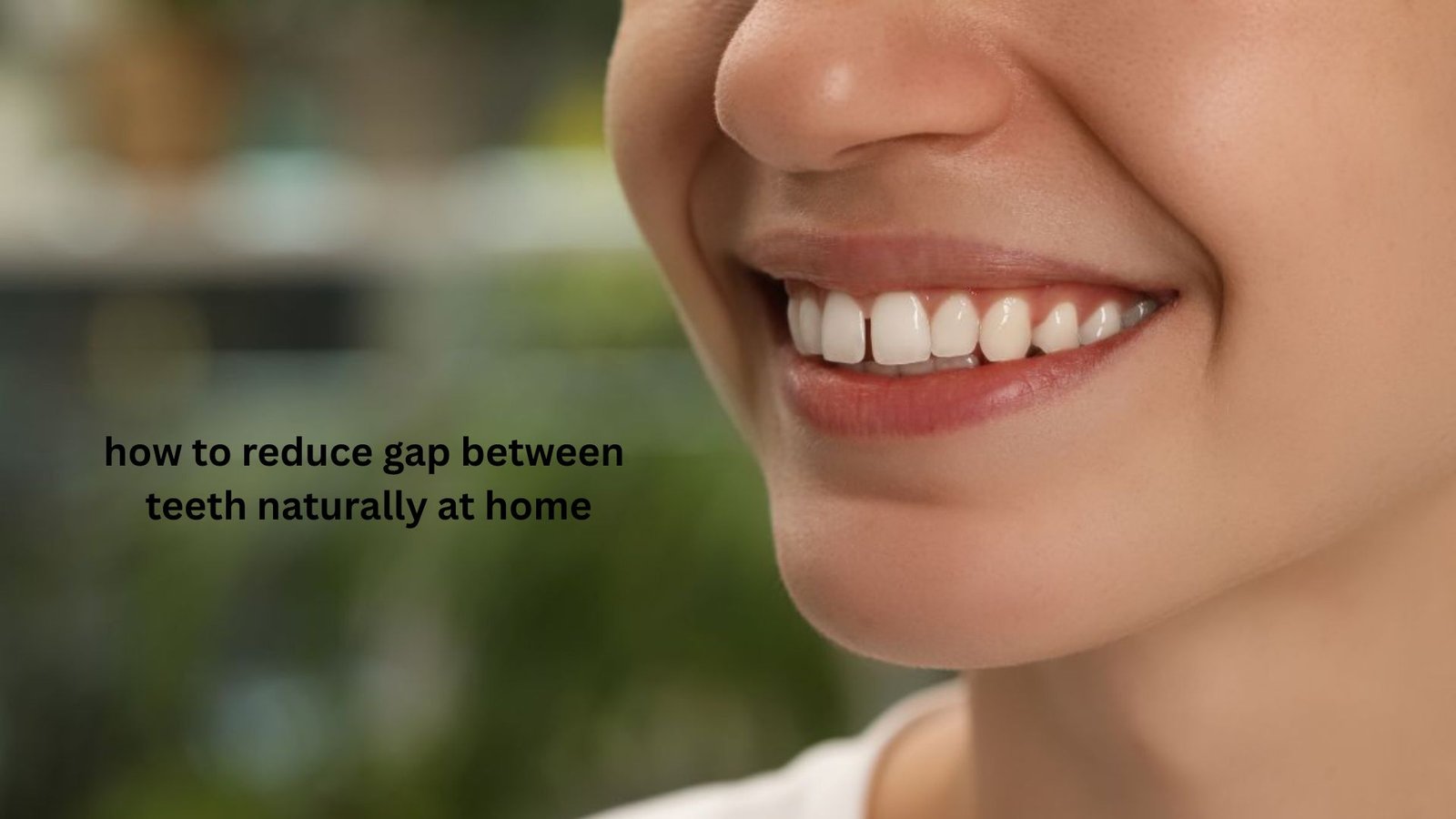
A small gap between your front teeth can be something you have lived with for years—or something you have only recently started noticing. You may have searched for how to reduce gap between teeth naturally at home because you would prefer to improve your smile without braces, aligners, bonding, or other dental procedures.
The important thing to understand first is that home care can protect your gums, improve the appearance of your teeth, and prevent a gap from getting worse, but it generally cannot physically move permanent teeth together. A gap between teeth is called a diastema, and its cause matters. Genetics, tooth size, missing teeth, the tissue between the front teeth, swallowing habits, and gum disease can all play a role.
That distinction is important because some popular internet methods involve pushing, tying, or otherwise forcing teeth together. These approaches can damage the gums or supporting tissues rather than safely closing the space.
This guide explains what you can realistically do at home, what does not work, when a gap may indicate a dental problem, and when professional treatment is the safer option.
Can You Naturally Close a Gap Between Teeth at Home?
Usually, no. There is no proven home remedy that can safely move permanent teeth together and permanently close a dental gap.
However, you can take steps at home that support healthy gums and teeth:
- Brush twice a day with fluoride toothpaste.
- Clean carefully between your teeth every day.
- Avoid habits that place excessive pressure on your front teeth.
- Maintain healthy gums.
- Avoid trying to physically push teeth together.
- Monitor whether the gap is changing.
This distinction is easy to overlook. Improving oral health is not the same as orthodontically moving teeth.
If your teeth are healthy but you simply dislike the space, closing the gap usually requires a treatment designed to change tooth position or tooth shape, such as orthodontics or dental bonding.
Why Do Gaps Develop Between Teeth?
Before trying to reduce a gap, it helps to understand why it exists.
Natural tooth spacing
Some people simply have naturally spaced teeth. Genetics can influence tooth size, jaw size and the relationship between the two. In these situations, the gap may be completely harmless.
A gap between the upper front teeth is particularly common and is known as a midline diastema.
Teeth that are relatively small
If your jaw has more available space than your teeth occupy, spaces can remain between them.
This can sometimes occur alongside unusually small or peg-shaped teeth or missing permanent teeth.
A prominent frenum
The labial frenum is the band of tissue connecting the inside of your upper lip with the gum above your front teeth.
In some people, this tissue contributes to a space between the front teeth. If it is a significant factor, simply brushing or flossing more cannot remove the underlying cause. A dentist has to assess whether it is actually contributing to the gap.
Tongue pressure and oral habits
Repeated pressure from the tongue against the front teeth can contribute to tooth movement over time.
This is one reason that simply concentrating on “pushing your teeth together” can be counterproductive. The forces acting on teeth are more complicated than they appear.
Gum disease
This is the cause you should take most seriously.
A new or widening gap in an adult can sometimes be associated with gum disease and loss of the tissues or bone supporting the teeth. Periodontitis can also cause loose teeth, bleeding gums, bad breath and changes in how your teeth meet.
If your gap appeared recently or seems to be getting larger, don’t treat it as merely a cosmetic issue.
Safe Things You Can Do at Home
While home remedies cannot normally close a permanent gap, your daily routine can make a meaningful difference to the health and appearance of your smile.
1. Brush gently twice a day
Use a soft-bristled toothbrush and fluoride toothpaste.
Brush all tooth surfaces rather than concentrating aggressively on the gap. Scrubbing harder does not push teeth together; it can irritate the gums.
A practical routine is:
- Brush for about two minutes.
- Use gentle, controlled movements.
- Clean around the gumline.
- Spit after brushing rather than aggressively rinsing away all the toothpaste.
The objective is clean, healthy gums—not physically moving the teeth.
2. Clean between your teeth every day
Food and plaque can accumulate around spaces between teeth.
Depending on the size of the gap, you may find dental floss, interdental brushes or another interdental cleaning aid useful. Daily cleaning is particularly important when food repeatedly becomes trapped.
For people with gum problems, professional guidance can help determine which interdental cleaning method fits the space. Mayo Clinic also recommends daily flossing or suitable alternatives such as interdental brushes or water flossers as part of gum-care routines.
3. Pay attention to your gums
Healthy gums should not routinely bleed when you brush or clean between your teeth.
Watch for:
- Persistent bleeding
- Swelling
- Red or unusually tender gums
- Persistent bad breath
- Pus around the gums
- Receding gums
- Loose teeth
- A newly developing space between teeth
These signs can point toward gum disease and deserve professional assessment.
4. Stop using your teeth as tools
This sounds unrelated to tooth gaps, but repeated mechanical stress can contribute to dental problems.
Avoid habits such as:
- Biting pens
- Opening packages with your teeth
- Chewing hard objects
- Constantly pressing your teeth with your fingers
- Trying to “train” teeth into a new position
Your teeth are designed for chewing food—not for repeated external pressure.
Can Pushing Your Teeth Together Close the Gap?
You should not try it.
Videos and social media posts sometimes suggest using fingers, rubber bands, string or other objects to force teeth toward each other.
This is particularly risky because tooth movement is not simply a matter of pushing two teeth together. Teeth are held in bone by supporting tissues, and uncontrolled force can affect the gums and surrounding structures.
A DIY approach may also create an uneven bite or move one tooth without properly controlling the other.
A smaller-looking gap is not worth damaging otherwise healthy teeth.
If you want your teeth physically moved, controlled orthodontic treatment is designed specifically for that purpose. Orthodontic care can involve braces, clear aligners or other appliances depending on the individual’s situation.
Do Rubber Bands Close Gaps Between Teeth?
Do not use rubber bands to close a tooth gap.
This is one of the most important warnings for anyone searching for natural ways to close a diastema.
A rubber band can exert concentrated pressure in an unpredictable way. Instead of producing controlled orthodontic movement, it can interfere with the tissues supporting the teeth and potentially cause serious dental damage.
The fact that something can physically pull teeth does not mean it can move them safely.
If you have already tried a rubber band or similar method and now have pain, bleeding, swelling, tooth looseness or changes in your bite, arrange a dental examination.
A Less Obvious Point: Your Gap May Not Need Closing
One useful perspective that is often missed online is that a dental gap is not automatically a dental problem.
If you have had the same small space for years, your teeth are stable, your gums are healthy and your bite functions normally, the gap may simply be part of your natural smile.
Cleveland Clinic notes that diastema is often a normal variation and usually does not harm oral health when it is not associated with an underlying problem.
That means the decision to close it can be primarily cosmetic.
This is different from a gap that is suddenly appearing or becoming wider.
Another Important Insight: Appearance and Tooth Position Are Different Problems
Suppose you have a small space between two otherwise healthy front teeth.
There are two fundamentally different ways a dentist might improve its appearance:
Move the teeth: Orthodontic treatment changes their position.
Change the shape of the teeth: Dental bonding can add tooth-colored composite material to alter the apparent width of the teeth and close the visible space.
This is why someone with a relatively small gap might not need extensive orthodontic treatment.
The best solution depends on why the gap exists, how large it is, the condition of your teeth and gums, and what you actually want to change.
What About Oil Pulling, Salt Water and Other Home Remedies?
You may encounter claims that coconut oil, salt water, baking soda or herbal preparations can physically close a tooth gap.
There is an important distinction here.
Some oral-care practices may help with cleanliness or gum comfort when used appropriately, but they do not create the controlled tooth movement necessary to close a permanent diastema.
For example, salt-water rinsing may be used in certain circumstances for oral comfort, but it should not be presented as an orthodontic treatment.
Likewise, whitening products may change tooth color, but they cannot bring teeth closer together.
A useful rule is:
If a remedy claims it can physically move permanent teeth without controlled orthodontic force, be skeptical.
What Professional Treatments Actually Close Tooth Gaps?
If you want a predictable change, these are the main approaches dentists may consider.
Dental bonding
Composite resin can be shaped onto the sides of teeth to reduce or close a visible space.
It can be particularly useful when the teeth are otherwise healthy and the gap is relatively small.
Braces
Braces gradually move teeth into planned positions.
They can be appropriate when the gap is part of a broader alignment or bite problem.
Clear aligners
Clear orthodontic aligners can also move teeth in selected cases.
Whether they are suitable depends on the individual tooth positions, bite and underlying cause.
Veneers
Porcelain veneers can alter the appearance of the front teeth and may be used to close or disguise certain spaces.
However, they are a dental procedure rather than a natural home remedy and require careful evaluation.
Frenum treatment
If an unusually prominent frenum contributes to the gap, a dentist may consider a frenectomy as part of an overall treatment plan. It is not something that should be attempted at home.
When a Tooth Gap Needs More Attention
A stable gap you’ve always had is usually less concerning than one that suddenly changes.
Make a dental appointment if:
- The gap is getting wider.
- A tooth has become loose.
- Your gums bleed frequently.
- Your gums are swollen or painful.
- You have persistent bad breath.
- Your teeth seem to be shifting.
- Your bite feels different.
- You notice new spaces appearing between several teeth.
These symptoms can occur with periodontal disease, which can damage the tissues and bone supporting the teeth.
A particularly important real-world scenario is an adult who notices that a previously stable front-tooth gap has become noticeably larger over several months. Trying to close that space at home could delay treatment of the actual problem.
Common Mistakes People Make
Mistake 1: Assuming every gap can be closed naturally
The cause determines the treatment. A gap related to tooth size is different from one associated with gum disease or a prominent frenum.
Mistake 2: Applying excessive pressure
More pressure does not mean faster or safer tooth movement.
DIY tooth movement can cause problems rather than produce an attractive result.
Mistake 3: Ignoring widening gaps
A changing gap deserves attention, particularly in adults.
Mistake 4: Focusing only on appearance
Healthy gums and supporting bone are more important than having perfectly touching front teeth.
Mistake 5: Expecting toothpaste to change tooth position
Toothpaste can help clean and protect teeth, but it cannot orthodontically move them.
A Simple At-Home Routine
If your goal is to keep a naturally spaced smile healthy while deciding whether you want treatment, try this routine:
Morning
- Brush with fluoride toothpaste.
- Clean around the gumline gently.
- Avoid aggressive brushing.
During the day
- Rinse or clean your mouth after meals when practical.
- Don’t use your teeth to open packages.
- Avoid deliberately pushing your teeth with your fingers or tongue.
Evening
- Clean between your teeth.
- Brush thoroughly for about two minutes.
- Pay attention to bleeding, swelling or tenderness.
Every few months
Check whether your teeth and the gap look stable. If the space is changing, arrange a dental examination rather than experimenting with DIY treatments.
FAQ
Can I reduce the gap between my teeth naturally at home?
You can improve oral hygiene and gum health at home, but there is no reliable home remedy proven to permanently close a gap between adult teeth. Tooth movement generally requires controlled orthodontic forces, while dental bonding can change the visible shape of teeth. Avoid methods that involve forcing teeth together.
How can I close a small gap between my front teeth without braces?
For a small cosmetic gap, dental bonding may sometimes provide an alternative to braces because the dentist changes the shape of the teeth rather than moving them. Clear aligners or other orthodontic options may also be considered depending on the cause. A dental examination is the best way to determine which approach is appropriate.
Does flossing close gaps between teeth?
No. Flossing removes plaque and food debris from between teeth and helps maintain healthy gums, but it does not normally move permanent teeth together. If a space appears smaller after cleaning, that may simply reflect removal of trapped debris or inflammation rather than actual tooth movement.
Can a gap between teeth close on its own?
Some gaps in children can change or close as permanent teeth erupt. In adults, a longstanding gap between permanent teeth is less likely to disappear spontaneously. The cause and size of the gap both matter.
Is a widening gap between teeth a sign of gum disease?
It can be. Gum disease can damage the tissues and bone supporting teeth, potentially causing teeth to loosen or spaces to develop. A new or widening gap—especially when accompanied by bleeding gums, swelling, loose teeth or bad breath—should be checked by a dentist.
Are rubber bands safe for closing a tooth gap at home?
No. You should not use rubber bands or similar objects to force teeth together. Uncontrolled pressure can damage the tissues supporting the teeth and may create additional dental problems. If you want to change tooth position, use professionally supervised orthodontic treatment.
Final Takeaway
If you’re wondering how to reduce gap between teeth naturally at home, the most honest answer is that home care can protect and improve your oral health, but it usually cannot permanently close a gap between adult teeth.
The safest approach is to brush properly, clean between your teeth, protect your gums and avoid DIY tooth-moving techniques. If the gap has always been there and your mouth is healthy, it may simply be a natural feature of your smile. If it is new, widening or accompanied by gum problems, finding the cause should come before worrying about its appearance.
And if closing the space is important to you, you have legitimate options—from bonding to orthodontic treatment—without risking your teeth through unproven home remedies. A dentist can help you choose the least invasive option that fits your particular situation.