Imagine walking into a brand-new house that has never had an owner. The kitchen is finished, the floors are installed, the bathrooms are complete, and the builder is ready to hand over the keys. You did not choose the floor plan, cabinets, paint colors, or most of the finishes. Instead, the builder selected them before construction based on what they believed buyers in that area would want.
That is essentially what a spec home is.
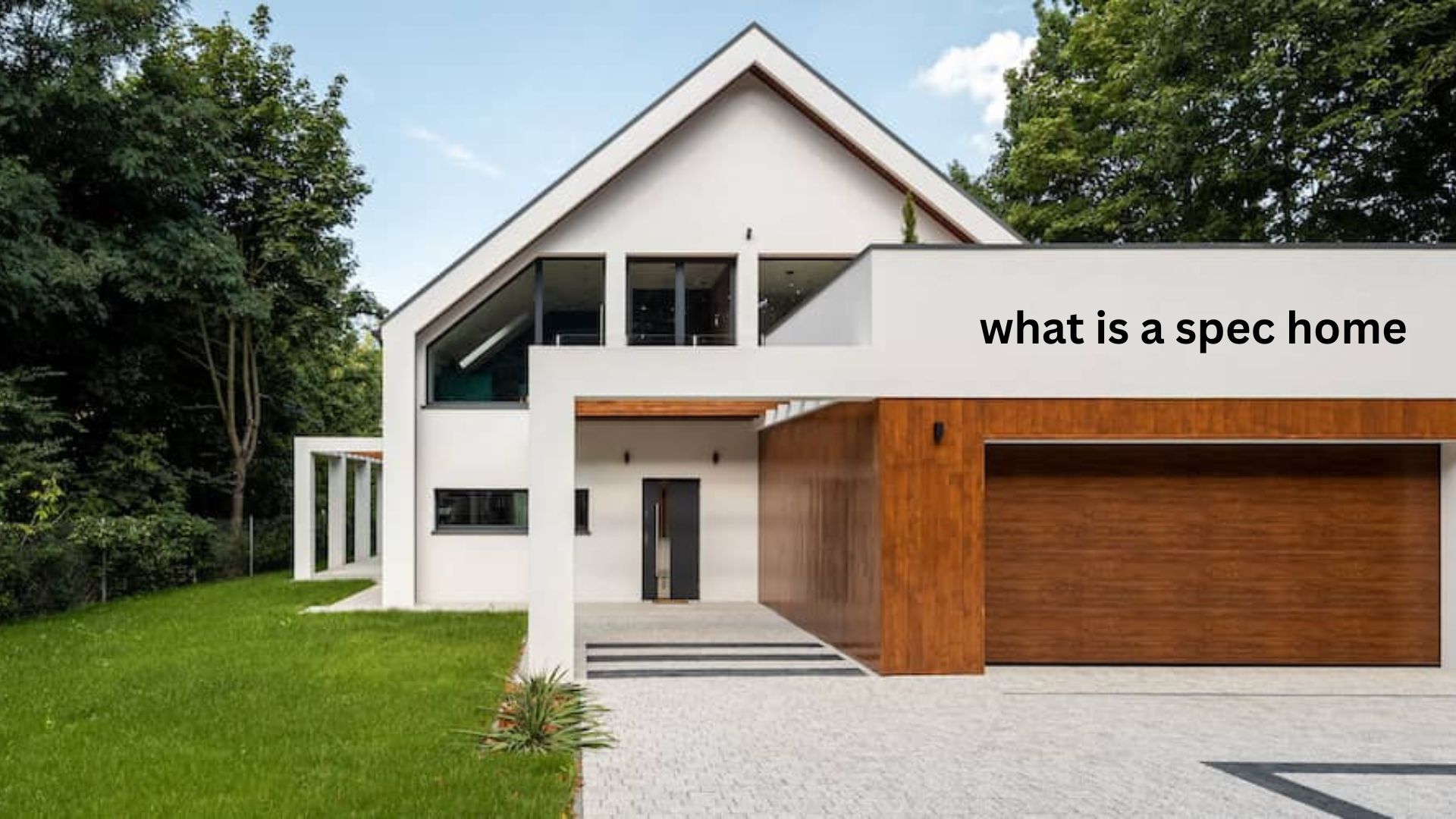
A spec home, short for speculative home, is a new house built by a builder without having a specific buyer under contract before construction begins. The builder is “speculating” that someone will want to purchase the completed or nearly completed property.
This can be an attractive option if you want the benefits of new construction without waiting a year or more for a fully customized house. But buying a spec home is different from buying a resale property or commissioning a custom build. The important questions are not simply whether the house looks good, but why it was built, what is included, how well it was constructed, and whether the price reflects the local market.
What Is a Spec Home?
A spec home is a newly constructed house built by a developer or builder for sale on the open market rather than for a specific buyer.
The builder typically chooses the:
- Floor plan
- Lot
- Exterior design
- Kitchen layout
- Appliances
- Flooring
- Cabinets
- Countertops
- Paint colors
- Lighting
- Landscaping
- Other finishes
The goal is to create a home that appeals to a broad group of potential buyers.
For example, a builder may purchase several lots in a growing suburban neighborhood and construct five different homes. Instead of waiting for buyers to select every detail, the builder completes the houses using popular designs and materials. Once finished, the properties are marketed for sale.
A spec home can be sold at different stages:
- Before construction begins
- During construction
- Near completion
- Fully completed and move-in ready
The closer the house is to completion, the less opportunity the buyer usually has to change the design.
Why Do Builders Build Spec Homes?
The main reason is straightforward: builders believe there is enough demand to sell the homes profitably.
A custom build reduces much of the builder’s sales risk because the buyer has already committed to the project. With a spec home, however, the builder takes on more risk.
The builder must pay for:
- Land
- Construction materials
- Labor
- Permits
- Financing
- Insurance
- Marketing
- Utilities and other carrying costs
The house may sit on the market for weeks or months after completion.
That risk is why builders tend to use designs that have already proven popular.
Spec Homes Are Designed for Broad Appeal
A builder generally does not want to create an extremely unusual house that only appeals to a handful of buyers.
Instead, a spec home might feature:
- An open kitchen and living area
- Three or four bedrooms
- Two or three bathrooms
- A practical garage
- Neutral flooring
- Modern kitchen finishes
- Energy-efficient equipment
- A functional backyard
The result is often less personalized than a custom home but easier to buy.
Spec Home vs. Custom Home
The biggest difference is who makes the major decisions.
| Feature | Spec Home | Custom Home |
|---|---|---|
| Buyer chosen before construction | Usually no | Usually yes |
| Design control | Limited | High |
| Construction speed | Generally faster | Generally slower |
| Personalization | Limited to available options | Extensive |
| Buyer involvement | Lower | Much higher |
| Pricing | Often easier to understand | Can change substantially |
| Risk of construction delays | Usually lower for completed homes | Often higher |
| Resale appeal | Usually designed for broad appeal | Depends on customization |
Suppose you need a home immediately because your lease ends in two months. A completed spec home may be far more practical than starting a custom build that could take many months.
On the other hand, if you have very specific requirements—such as a particular floor plan, accessibility features, or a dedicated workshop—a custom home may make more sense.
Spec Home vs. Production Home
These terms are sometimes confused.
A production home is usually one of several homes built by a builder using a set of established floor plans, often within a larger development.
A spec home describes the builder’s decision to construct a property without having a committed buyer.
A production builder can therefore build spec homes.
For instance, a developer might offer five floor plans in a subdivision. A buyer could order one and select available options. Meanwhile, the builder might independently construct another version of the same floor plan and put it on the market as a spec home.
So the categories can overlap.
What Does “Move-In Ready Spec Home” Mean?
A move-in ready spec home generally means the major construction work is complete and the property is prepared for occupancy, subject to local approval and closing requirements.
However, move-in ready does not automatically mean perfect.
You should still verify:
- Final inspections
- Building permits
- Certificate of occupancy, where applicable
- Appliances included in the sale
- Landscaping responsibilities
- Warranty coverage
- Utility connections
- Any unfinished exterior work
- Items listed as exclusions in the purchase agreement
One practical mistake buyers make is assuming that everything visible during a showing automatically comes with the house.
It does not.
If you want the refrigerator, window coverings, outdoor furniture, security equipment, or a particular appliance to remain, make sure it is addressed in the contract.
What Are the Advantages of Buying a Spec Home?
A spec home can solve several problems that come with buying or building a house.
1. You Can Move in Faster
If construction is already finished, you may be able to close relatively quickly.
This can be valuable for buyers who are:
- Relocating for work
- Selling another property
- Moving to a new city
- Facing a lease deadline
- Looking for a newly built home without a long construction period
2. You Get a New House Without Designing Everything
Some buyers like new construction but do not want to spend months deciding between dozens of cabinet, tile, flooring, and fixture options.
With a spec home, most decisions have already been made.
You can walk through the finished property and decide whether you like the result.
3. Modern Features May Already Be Included
Depending on the builder and market, a new spec home may include modern:
- HVAC systems
- Windows
- Insulation
- Appliances
- Electrical systems
- Plumbing fixtures
- Smart-home features
- Energy-efficiency improvements
But never assume a feature is included simply because it is common in newer homes. Confirm the specifications.
4. You Can See What You Are Buying
This is one of the most underrated advantages.
With an unfinished custom build, you are making many decisions based on drawings, samples, and expectations.
With a completed spec home, you can physically evaluate:
- Room proportions
- Natural light
- Storage
- Cabinet space
- Traffic flow
- Ceiling height
- Yard size
- Noise levels
That can make the purchasing decision much more concrete.
What Are the Disadvantages of a Spec Home?
Spec homes also have limitations.
Limited Personalization
You may dislike the kitchen backsplash, flooring, paint color, or light fixtures.
If the house is already finished, changing those elements becomes your expense.
Builder Risk Becomes Buyer Due Diligence
A beautiful finished house can hide construction problems.
That is why an independent home inspection is particularly important.
Do not assume that a new home does not need an inspection. New construction can still contain issues involving drainage, roofing, HVAC installation, electrical work, plumbing, grading, or workmanship.
Potentially Higher Price
A builder’s asking price may reflect more than construction costs. It can include land costs, financing expenses, overhead, marketing, profit expectations, upgrades, and the current market.
The fact that a property is new does not automatically make it a good value.
Less Choice
If you want to move a wall, add a bathroom, change the roof design, or relocate the kitchen, a completed spec home may not accommodate those preferences.
How Much Does a Spec Home Cost?
There is no universal price for a spec home.
The price depends heavily on:
- Location
- Lot value
- Home size
- Construction quality
- Local labor costs
- Materials
- Market demand
- Builder reputation
- Included upgrades
- Financing conditions
A useful way to evaluate the price is not simply to compare the house with other new homes.
Compare it with recently sold homes, particularly properties with similar:
- Square footage
- Lot size
- Age
- Number of bedrooms
- Number of bathrooms
- Garage capacity
- Location
- Quality of finishes
The asking price is a starting point, not proof of market value.
A Less Obvious Factor: The Builder’s Carrying Costs
One useful perspective for buyers is understanding that a completed spec home costs the builder money every day it remains unsold.
The builder may be paying interest on construction financing, taxes, insurance, utilities, maintenance, and other expenses.
This does not mean every builder will accept a huge discount after a house sits on the market. But it does mean time-on-market can become relevant during negotiations.
Instead of asking only, “Will the builder lower the price?” consider negotiating for value through:
- Closing-cost contributions
- Rate incentives
- Appliance upgrades
- Landscaping
- Window coverings
- Warranty extensions
- Other agreed improvements
A builder may resist cutting the advertised price because comparable listings influence future sales, while being more flexible with incentives.
Should You Get a Home Inspection on a Spec Home?
Yes, in most cases, an independent inspection is a wise investment.
Even if the property has passed required inspections, your private inspection serves a different purpose: it gives you an independent assessment of the property’s condition.
For a nearly completed home, consider inspecting at more than one stage if your contract and local process allow it.
A useful approach is:
- Inspect during construction if possible.
- Inspect again near completion.
- Conduct a final walkthrough before closing.
Pay particular attention to drainage and grading. Cosmetic issues are easy to notice, but water-management problems can become much more expensive.
Also ask whether the builder provides a written warranty and understand the procedure for reporting defects after closing.
What Should You Ask a Spec Home Builder?
Before signing, ask direct questions.
About construction
- Who built the house?
- How long has the builder operated?
- Which contractors performed major work?
- What inspections have been completed?
- Are permits finalized?
About the property
- What exactly is included?
- Which items are upgrades?
- Are there unfinished exterior projects?
- What appliances remain?
- What landscaping will be completed?
About the warranty
- What does the builder warranty cover?
- How long does coverage last?
- Who handles warranty claims?
- What happens if a contractor fails to respond?
About the price
- How was the asking price determined?
- What comparable homes support it?
- Are closing incentives available?
- Are there financing incentives?
Getting answers in writing is preferable to relying on informal conversations.
Common Mistakes Buyers Make
Mistake 1: Assuming “New” Means “Problem-Free”
New homes can have defects. Newness reduces some risks associated with age and wear, but it does not eliminate construction problems.
Mistake 2: Falling in Love Before Checking the Numbers
A professionally finished house can create an emotional reaction.
Before making an offer, compare the property with recent sales and calculate the full ownership cost.
Mistake 3: Ignoring the Neighborhood
You are not only buying a house.
You are also buying its location, surrounding development, traffic conditions, school considerations where relevant, property taxes, homeowners association obligations, and future neighborhood changes.
Mistake 4: Not Reading the Specifications
A sales office may display attractive finishes that are not included in the base specification.
Read the contract and specifications carefully.
Mistake 5: Skipping the Inspection
The cost of an inspection is small compared with the potential cost of discovering a serious construction or drainage issue after closing.
A Real-World Buying Scenario
Imagine a couple relocating for work.
They find two similar houses for $450,000. One is a five-year-old resale property that needs new flooring and some cosmetic updates. The other is a completed spec home with new appliances, modern finishes, and a builder warranty.
At first glance, the new house seems like the obvious choice.
But they investigate further.
The resale home has a larger lot, lower annual property taxes, and recently sold comparable properties suggest its asking price is reasonable. The spec home has a smaller yard but offers a builder incentive that reduces their initial closing costs.
Neither is automatically the better purchase.
The correct choice depends on the couple’s priorities, expected length of ownership, financing, maintenance expectations, and the actual condition and market value of each property.
That is the key lesson: a spec home should be evaluated as a property, not merely as a “new house.”
Three Insights Buyers Often Overlook
1. The Best Spec Home May Not Be the Most Customized One
Builders generally choose finishes for broad market appeal. That can actually help resale because highly personal design choices may limit the future buyer pool.
A neutral home with a functional layout can sometimes outperform a heavily customized property.
2. Lot Quality Can Matter More Than Interior Upgrades
Buyers often focus on countertops and flooring because they are immediately visible.
But lot drainage, orientation, privacy, street position, backyard usability, and surrounding development can have a much greater long-term effect on satisfaction.
You can replace countertops. You cannot easily move the house to a better lot.
3. The Final Price Is Only Part of the Deal
A $450,000 spec home with substantial seller incentives may have a different financial outcome from a $440,000 house with no concessions.
Compare the total transaction economics, including financing incentives, closing costs, taxes, insurance, HOA charges, maintenance expectations, and immediate upgrades.
Is a Spec Home Right for You?
A spec home may be a strong choice if you want:
- A newly built property
- Faster occupancy
- Modern finishes
- Less design work
- A predictable finished product
- Potential builder warranty coverage
It may be less suitable if you:
- Want extensive customization
- Have unusual space requirements
- Want complete control over materials
- Enjoy managing the construction process
- Need a very specific architectural design
The best decision comes from matching the property to your priorities rather than assuming new construction is automatically superior.
Frequently Asked Questions
What is a spec home in real estate?
A spec home is a house a builder constructs without having a specific buyer committed to purchase it beforehand. The builder chooses the design, finishes, and features based on what they believe will sell. It can be sold during construction or after completion. The term comes from “speculative,” because the builder is taking the risk that a buyer will purchase the finished property.
Is buying a spec home cheaper than building a custom home?
Not necessarily. A spec home may be competitively priced because the builder uses standardized designs and materials, but the final price depends on the local market, land cost, construction expenses, and included features. A custom home also has many variables that can increase its price. Comparing the total cost and value of both options is more useful than assuming one is always cheaper.
Can you negotiate the price of a spec home?
Yes, you can negotiate a spec home’s price in some circumstances, although the builder may prefer offering incentives rather than reducing the advertised price. Possible concessions include closing-cost assistance, financing incentives, upgrades, appliances, or landscaping. The builder’s willingness to negotiate can depend on how long the property has been listed and current market conditions.
Do you need a home inspection for a new spec home?
An independent inspection is generally a sensible step even when a spec home is brand new. Required building inspections do not necessarily replace a buyer’s independent evaluation. An inspector can identify workmanship, drainage, installation, or other issues that may need attention before closing. If possible, buyers can consider inspections during construction and again near completion.
What is the difference between a spec home and a custom home?
A spec home is designed and built by the builder before a specific buyer commits to it, while a custom home is generally designed around an individual buyer’s requirements. Spec homes usually offer less personalization but can provide faster occupancy and a finished product that buyers can evaluate before purchasing. Custom homes provide much greater control but often require more time, decisions, and budget management.
Are spec homes move-in ready?
Many completed spec homes are marketed as move-in ready, but buyers should confirm exactly what that means. Check whether final approvals, landscaping, appliances, utilities, and other promised work have been completed. Always review the purchase agreement and builder specifications rather than relying only on the marketing description.
Conclusion
Understanding what is a spec home comes down to one simple idea: it is a home a builder constructs based on expected buyer demand rather than for a specific customer.
For the right buyer, that can be a major advantage. You can get a new house without designing every detail, see the finished product before purchasing, and potentially move in much sooner than with a custom build.
But the word “new” should never replace careful due diligence.
Look beyond attractive finishes. Investigate the builder, inspect the property, study comparable sales, understand what is included, evaluate the lot and neighborhood, and calculate the complete cost of ownership.
A good spec home is not simply one that looks impressive during a showing. It is one whose construction quality, location, price, and long-term practicality make sense for the person buying it.