
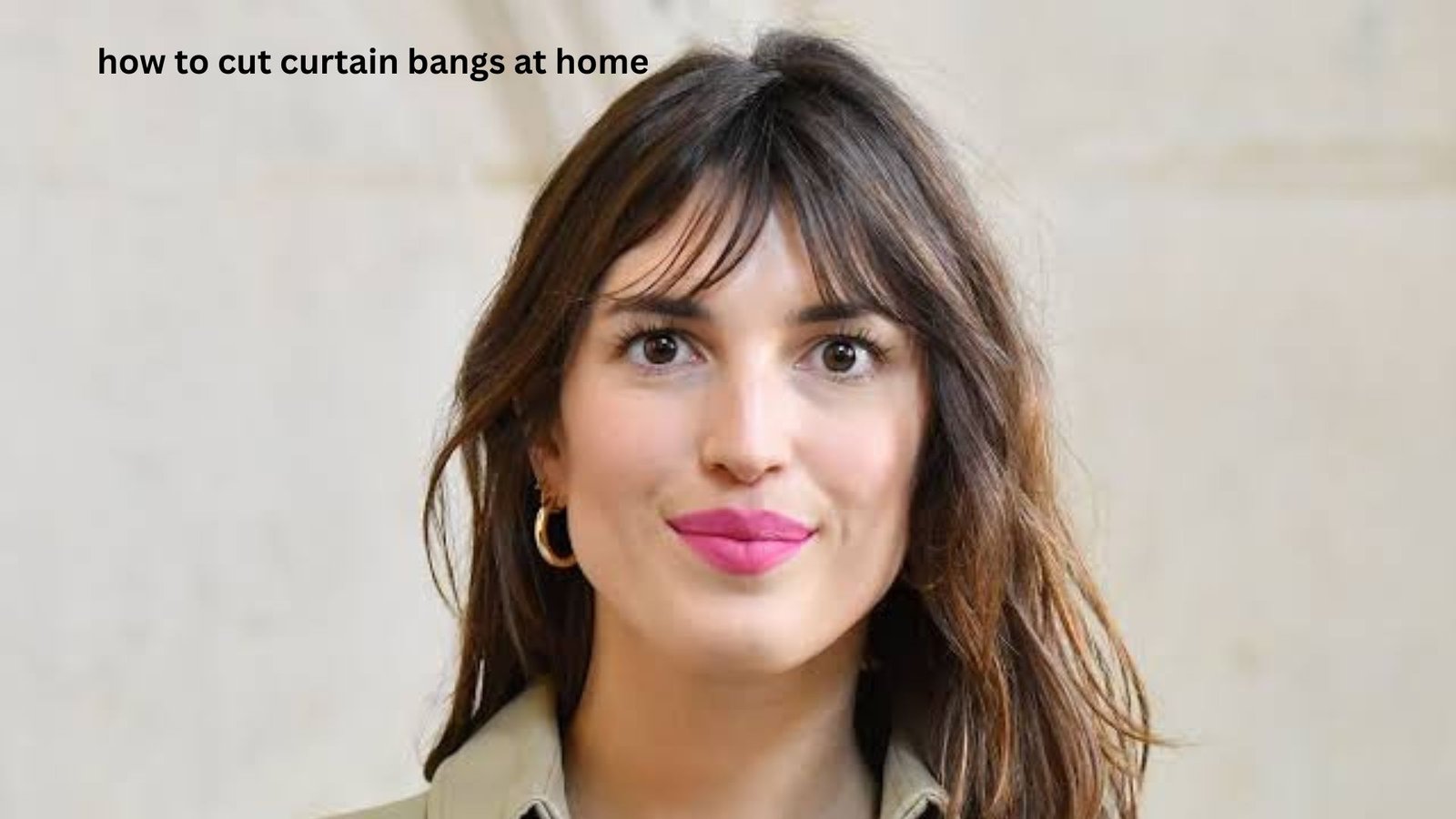
Few hair changes feel as exciting — or as risky — as cutting your own bangs. Many people love the soft, effortless look of curtain bangs but hesitate because they have seen uneven DIY cuts go wrong. The good news is that learning how to cut curtain bangs at home does not require professional tools or years of salon experience. With the right technique, patience, and a clear understanding of how bangs should frame your face, you can create a flattering shape yourself.
This guide explains the process step by step, including how much hair to section, where to make your first cut, how to avoid the most common mistakes, and how to adjust curtain bangs for different face shapes and hair textures. Whether you are trying a fresh style between salon visits or creating your first set of face-framing bangs, these practical tips will help you achieve a softer, more natural result.
What Are Curtain Bangs and Why Are They So Popular?
Curtain bangs are a type of fringe that parts in the middle or slightly off-center and gradually becomes longer toward the sides of the face. Unlike traditional straight-across bangs, they create a softer frame that blends into the rest of your haircut.
Their popularity comes from their versatility. Curtain bangs can work with:
- Long layered hair
- Shoulder-length cuts
- Short hairstyles
- Straight, wavy, or curly textures
- Casual or polished looks
One reason many people prefer curtain bangs over classic bangs is that they grow out more gracefully. A slightly imperfect cut is often less noticeable because the style relies on movement and blending rather than a perfectly straight line.
Before Cutting Curtain Bangs at Home: What You Need
A successful DIY haircut starts with preparation. Cutting bangs while rushing is one of the fastest ways to create a result you do not like.
You will need:
- Sharp hair-cutting scissors
- A fine-tooth comb
- Hair clips or sectioning clips
- A mirror with good lighting
- A spray bottle with water (optional)
Avoid using regular household scissors. They are usually too dull and can bend or crush the hair instead of creating a clean cut.
A helpful professional trick is to cut less than you think you need. Hair naturally appears shorter after it dries, especially if your hair has waves or curls.
Should You Cut Curtain Bangs on Wet or Dry Hair?
For beginners, cutting curtain bangs on dry hair is usually safer.
Wet hair stretches when cut. Once it dries, it can shrink and sit higher than expected. This is especially important for:
- Curly hair
- Wavy hair
- Thick hair
Many hairstylists shape curtain bangs on dry hair because they can see the natural fall and movement. If your hair is very straight and difficult to control, lightly dampening it can help, but avoid soaking it completely.
A useful approach is:
- Cut the basic shape on dry hair.
- Style it naturally.
- Make small adjustments afterward.
The goal is not perfection during the first cut. The goal is creating a flexible shape that works with your natural texture.
How to Cut Curtain Bangs at Home Step by Step
Step 1: Find Your Bang Section
The biggest mistake people make is taking too much hair from the front.
Start by creating a triangle section at the front of your head.
To find the right amount:
- Place the tip of a comb near the top center of your head.
- Move slightly backward until you find the area where your hair naturally begins to curve.
- Separate a small triangle section that reaches toward the outer corners of your eyebrows.
For softer curtain bangs, keep the section smaller. You can always add more hair later, but removing too much cannot be reversed quickly.
Step 2: Create a Center Part
Curtain bangs depend on their parting pattern.
Make your normal middle part or the part you usually wear. Comb the front section forward and separate it into two equal sides.
This helps you create the signature “curtain” effect where the shortest pieces sit near the center and the sides gradually become longer.
Step 3: Decide Your Starting Length
This is where many DIY cuts go wrong.
Do not cut directly at eyebrow level unless you specifically want short bangs. A safer starting point is usually:
- Around the bridge of the nose for longer curtain bangs
- Around cheekbone level for medium curtain bangs
- Around eyebrow level for shorter styles
Remember that you can always trim more, but you cannot immediately add length back.
Step 4: Make the First Cut Using a Point-Cutting Method
Instead of cutting a straight horizontal line, use point cutting.
Hold your scissors vertically and gently snip upward into the ends. This creates a softer finish and prevents harsh, obvious lines.
The basic technique:
- Comb one side of the bangs forward.
- Hold the hair between your fingers.
- Angle your fingers slightly downward toward the cheek.
- Trim small amounts using upward snips.
- Repeat on the other side.
The center should be slightly shorter, while the outer sections should blend longer into your haircut.
Step 5: Create the Curtain Shape
After the first cut, check how the bangs fall naturally.
Curtain bangs should usually have:
- Shorter pieces near the middle
- Longer pieces around the cheekbones
- Smooth blending into the rest of the hair
A common professional technique is to twist each side slightly before trimming the ends. This creates softer movement, but beginners should use caution because twisting too tightly can create uneven lengths.
How to Cut Curtain Bangs for Different Face Shapes
Curtain bangs are popular because they can be customized instead of following one fixed shape.
Round Face Shapes
Longer curtain bangs usually work best because they create vertical lines and make the face appear more elongated.
Try:
- Keeping the shortest pieces below the cheekbone
- Adding more length around the sides
Oval Face Shapes
Most curtain bang styles work well with oval faces.
You can experiment with:
- Shorter center pieces
- More volume at the roots
- Wider curtain sections
Square Face Shapes
Soft, blended bangs can balance stronger jawlines.
Avoid very sharp cuts. Instead, create:
- Feathered ends
- Longer side pieces
- Gentle curves
Adjusting Curtain Bangs for Different Hair Types
Straight Hair
Straight hair shows every cutting mistake, so make smaller adjustments.
A good technique is:
- Cut slightly longer than your goal length
- Style the bangs first
- Trim tiny pieces afterward
Wavy Hair
Wavy hair can create natural volume, which means bangs may appear shorter.
Cut conservatively and consider leaving extra length.
Curly Hair
Curly curtain bangs require special care because curls shrink.
Many curly-haired people prefer cutting curls individually while dry rather than pulling the hair straight.
Common Mistakes When Cutting Curtain Bangs at Home
Cutting Too Much Hair
Taking a large section creates heavy bangs instead of soft curtain bangs.
A small section gives you more control and a more natural result.
Cutting Straight Across
A blunt horizontal cut often creates a traditional fringe, not curtain bangs.
The style depends on angles and gradual length changes.
Making Both Sides Too Short
Curtain bangs are not meant to look identical like a ruler measurement. They should balance with your face and hairstyle.
Always check how they move when you turn your head.
Over-Thinning the Bangs
Using thinning scissors too aggressively can make bangs look stringy.
It is better to create softness through careful cutting and blending.
How to Fix Curtain Bangs If You Cut Them Too Short
If your bangs are shorter than expected, do not immediately try to correct them by cutting more.
Instead:
- Use a round brush to create lift
- Try a side part temporarily
- Blend them into layers
- Use styling products for texture
Hair grows approximately half an inch per month, so small mistakes usually become easier to manage within a few weeks.
One practical trick is changing your styling technique before changing your haircut. Many people think their bangs are too short when they actually need a different blow-drying direction.
How to Style Curtain Bangs After Cutting
The classic curtain bang look usually comes from styling rather than the haircut alone.
A simple method:
- Apply a small amount of lightweight styling product.
- Blow-dry the bangs forward.
- Use a round brush to lift the roots.
- Roll the brush away from your face.
- Let the bangs cool before releasing.
For a natural everyday look, avoid making both sides perfectly symmetrical. Slight movement often creates the effortless appearance people want from curtain bangs.
Expert Tips Most DIY Guides Miss
Your Hairline Matters More Than Your Face Shape
People often focus only on face shape, but your natural hairline affects how curtain bangs behave. If your hair naturally grows forward or has a strong cowlick, you may need a slightly different section size or length.
The Best Curtain Bangs Are Designed for Growth
A smart DIY cut should still look good several weeks later. Leaving enough length around the sides creates a smoother transition as the bangs grow.
Lighting Can Change Your Cutting Accuracy
Many uneven DIY cuts happen because one side of the face is better lit than the other. Always check your haircut from different angles before making final adjustments.
FAQ
Can I cut curtain bangs myself if I have never cut hair before?
Yes, you can cut curtain bangs at home as a beginner if you start slowly and remove small amounts of hair. The most important rule is avoiding a large first cut because you cannot undo removing too much length. Using point cutting instead of a straight cut also helps create a softer result.
How long should curtain bangs be when cutting them at home?
The ideal length depends on your style and face shape, but many beginners should start around the nose or cheekbone area. This gives room for adjustment and prevents accidentally creating very short bangs. You can always trim upward gradually after styling.
Should curtain bangs be cut straight or at an angle?
Curtain bangs should generally be cut at an angle because the style depends on shorter center pieces blending into longer sides. A straight cut creates a different look and can appear heavier. Angled cutting helps the bangs frame the face naturally.
How do I cut curtain bangs on thick hair?
For thick hair, avoid taking a large front section. Start with a smaller triangle section and create layers through careful trimming rather than removing too much weight. Thick hair often looks best with longer, blended curtain bangs.
How often do curtain bangs need trimming?
Most curtain bangs need a small refresh every four to eight weeks, depending on how quickly your hair grows and how precise you want the shape. Many people maintain them at home by trimming only the longest pieces rather than repeating the entire haircut.
Conclusion
Learning how to cut curtain bangs at home is less about making a perfect first cut and more about understanding shape, length, and how your hair naturally moves. With the right sectioning technique, careful trimming, and patience, you can create soft face-framing bangs without a salon appointment.
The biggest secret is to cut conservatively. Start longer, make small adjustments, and focus on how the bangs blend with your overall hairstyle. A thoughtful DIY approach will give you a result that looks natural, grows out beautifully, and feels like it was designed specifically for you.