If homework turns into a daily struggle or your child gets distracted every few minutes, the problem may not be motivation—it could be the environment. Learning at home has become a regular part of family life, yet many children are expected to study wherever there happens to be space: the dining table, the couch, or even the floor. These areas often come with distractions that make it harder to focus, remember information, and enjoy learning.
Knowing how to create a learning corner at home for kids can make a remarkable difference. A thoughtfully designed learning space doesn’t need to be expensive or large. In fact, some of the most effective study corners fit into a small bedroom, a quiet hallway, or an unused corner of the living room. What matters most is that the space helps children concentrate, feel comfortable, and develop positive learning habits.
This guide walks you through every step—from choosing the right location to organizing supplies, encouraging independence, and adapting the space as your child grows. You’ll also discover practical strategies, common mistakes to avoid, and a few overlooked ideas that make learning corners far more effective in real family life.
What Is a Learning Corner?
A learning corner is a dedicated space designed specifically for educational activities. Unlike a general play area, it signals to a child that it’s time to focus, explore, read, create, or complete schoolwork.
It can be as simple as:
- A small desk beside a window
- A reading nook with shelves and cushions
- A quiet corner with a table and learning materials
- A shared study station for siblings
The goal isn’t perfection. It’s consistency. When children associate one place with learning, their brains gradually build a routine that makes focusing easier.
Why a Dedicated Learning Space Matters
Research and everyday parenting experience both show that environment shapes behavior.
A consistent learning corner helps children:
- Stay focused longer
- Build independent study habits
- Reduce distractions
- Feel responsible for their own learning
- Transition more easily between playtime and study time
Parents often notice another benefit that isn’t discussed enough: homework arguments decrease because the routine becomes predictable.
Instead of repeatedly saying, “Go do your homework,” the learning corner itself becomes a gentle reminder.
Choose the Best Location in Your Home
The perfect learning corner doesn’t require a separate room.
Instead, look for a space that offers:
Quiet surroundings
Avoid areas directly in front of televisions or busy walkways.
Even moderate background activity can interrupt concentration, especially for younger children.
Good natural light
Natural daylight reduces eye strain and helps children stay alert.
If natural light isn’t available, choose bright, warm lighting that evenly illuminates the workspace.
Minimal distractions
Keep the area away from:
- Gaming consoles
- Loud conversations
- Constant foot traffic
- Toys that aren’t being used for learning
If space is limited, consider using a folding screen or bookshelf to create visual separation.
Select Child-Friendly Furniture
Children learn best when they’re physically comfortable.
Choose furniture that matches their size rather than expecting them to adapt to adult furniture.
A good setup includes:
- A sturdy desk or table
- A chair that supports good posture
- Feet resting comfortably on the floor or a footrest
- Enough tabletop space for books and writing
Avoid oversized desks that make children stretch awkwardly.
Comfort encourages longer periods of productive learning.
Organize Supplies So Kids Can Reach Everything
One of the biggest reasons children interrupt homework is searching for supplies.
Keep commonly used materials within easy reach.
Examples include:
- Pencils
- Crayons
- Markers
- Scissors
- Glue
- Sticky notes
- Notebooks
- Rulers
- Erasers
Use:
- Small containers
- Drawer organizers
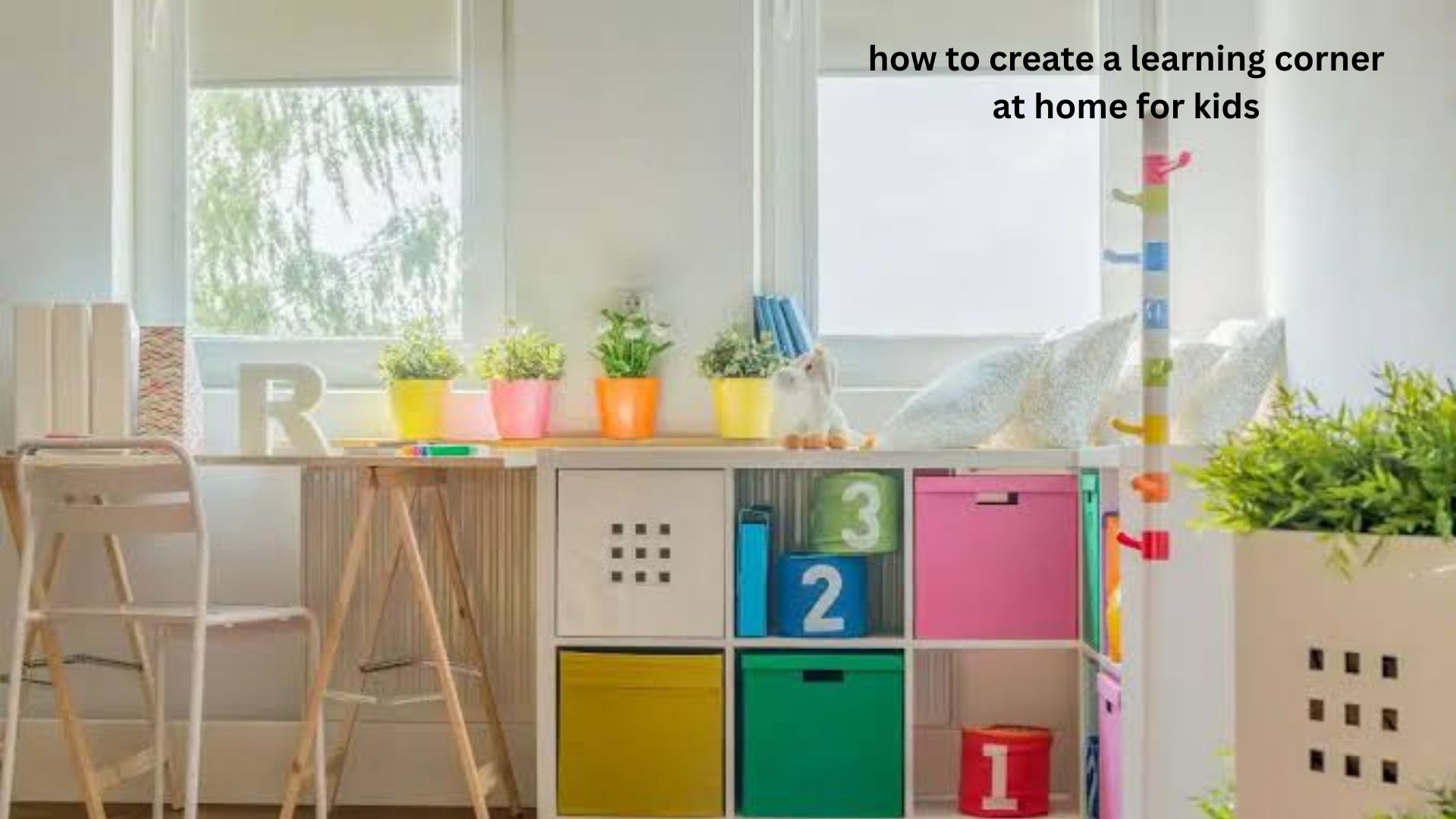
- Clear storage bins
- Labelled baskets
When children can independently find and return supplies, they develop responsibility without constant reminders.
Create Different Learning Zones
A highly effective learning corner often includes mini-zones rather than one flat workspace.
For example:
Reading Zone
Include:
- Bookshelf
- Comfortable chair or floor cushion
- Reading lamp
- Age-appropriate books
Writing Zone
Provide:
- Desk
- Paper
- Stationery
- Dictionary
- Writing prompts
Creative Zone
Keep art materials together for:
- Drawing
- Crafting
- Science projects
- Building models
Separating activities helps children mentally switch between different kinds of learning.
Reduce Visual Clutter
Many parents believe educational posters covering every wall inspire learning.
In reality, too much visual information can overwhelm children.
Instead:
Choose only a few meaningful items such as:
- Alphabet chart
- Number line
- Calendar
- Weekly goals
- Child’s artwork
Leave empty wall space.
A calmer environment often supports better concentration.
Add Personal Touches
Children feel more connected to spaces they help create.
Invite them to choose:
- Desk color
- Pencil holder
- Reading cushion
- Plant
- Name sign
- Inspirational quote
Ownership increases pride and responsibility.
Rather than feeling like a classroom, the learning corner becomes their special place.
Keep Technology Purposeful
Computers and tablets can be valuable learning tools.
However, they should serve education rather than entertainment during study time.
Helpful guidelines include:
- Disable unnecessary notifications.
- Keep only learning apps open.
- Use headphones when appropriate.
- Place screens at eye level.
- Schedule breaks from digital devices.
Balancing digital and paper-based learning supports healthier attention spans.
Build Daily Learning Routines
A learning corner works best when paired with consistent habits.
For example:
- Put away toys.
- Prepare supplies.
- Review today’s tasks.
- Complete the hardest assignment first.
- Take a short movement break.
- Finish with reading.
Children thrive on predictable routines because they reduce decision fatigue.
Encourage Independent Learning
Parents naturally want to help, but doing too much can unintentionally reduce confidence.
Instead of giving answers immediately, try asking:
- “What do you think?”
- “Where could you find that information?”
- “Can you explain your thinking?”
These questions develop problem-solving skills that extend far beyond school.
One unique insight many families discover is that independence grows faster when parents stay nearby without constantly interrupting. Simply being present while working on your own tasks often provides enough reassurance.
Make the Learning Corner Flexible
Children’s needs change quickly.
A preschool learning corner looks very different from one designed for older elementary students.
As children grow:
Update:
- Chair height
- Books
- Supplies
- Organization system
- Study tools
Review the space every few months rather than assuming one setup will work forever.
Practical Learning Activities for the Corner
A learning corner isn’t only for homework.
Use it for everyday learning activities such as:
- Reading together
- Puzzle solving
- STEM experiments
- Journaling
- Drawing maps
- Practicing handwriting
- Learning multiplication tables
- Educational board games
- Vocabulary practice
- Storytelling
Variety keeps learning enjoyable.
Common Mistakes Parents Make
Even well-designed spaces can lose effectiveness if certain habits develop.
Avoid these common mistakes:
Making the area too complicated
Children don’t need dozens of educational tools.
Simple, organized spaces often work best.
Expecting perfect focus
Young children naturally lose concentration.
Short study sessions with breaks are more realistic.
Constantly correcting
Too much supervision creates anxiety.
Offer guidance rather than hovering.
Ignoring comfort
Poor lighting or uncomfortable seating affects attention more than many parents realize.
Never refreshing the space
Changing books, challenges, and seasonal activities keeps the area interesting.
Real-Life Example
Imagine two siblings sharing a small apartment.
Their parents place a narrow desk beside the window and add two labeled baskets—one for each child.
Homework begins every weekday at the same time.
Each child collects supplies, completes one task independently, then asks for help if needed.
After several weeks, arguments about finding pencils disappear.
Homework finishes earlier because everything has a permanent place.
The improvement didn’t come from expensive furniture.
It came from consistency, organization, and predictable routines.
Two Often-Overlooked Ideas That Make a Big Difference
1. Include a “Finished Work” Basket
Many children don’t experience a clear sense of completion.
A simple basket where completed assignments are placed creates a satisfying end point.
This small habit builds confidence and reduces forgotten homework.
2. Leave Room for Curiosity
Not every minute in the learning corner should be planned.
Keep a notebook where children can write questions they think of throughout the week:
- Why is the sky blue?
- How do volcanoes form?
- Why do leaves change color?
Answering these questions together encourages lifelong learning rather than learning only for grades.
These curiosity sessions often become the most memorable part of the learning routine.
How to Maintain the Learning Corner
Once each week:
- Remove unnecessary papers.
- Sharpen pencils.
- Refill supplies.
- Rotate books.
- Clean the desk.
- Celebrate completed work.
A five-minute weekly reset prevents clutter from slowly taking over.
Children can participate in this routine, strengthening organizational skills they’ll use throughout life.
Signs Your Learning Corner Is Working
You don’t need perfect grades to know it’s helping.
Positive signs include:
- Homework begins with fewer reminders.
- Children spend longer focusing.
- Supplies stay organized.
- Reading becomes more frequent.
- Children voluntarily use the space.
- Stress around learning decreases.
Small behavioral improvements often matter more than immediate academic results.
FAQ
How do I create a learning corner at home for kids in a small apartment?
Even a tiny home can accommodate a learning corner. Use an unused bedroom corner, part of the dining room, or a hallway nook with a compact desk. The key is creating consistency rather than finding a large space. Portable storage also helps keep the area organized when space is limited.
What should every kids’ learning corner include?
A comfortable chair, a suitable desk, good lighting, organized school supplies, and age-appropriate learning materials form the foundation of an effective learning corner. Beyond these essentials, keep distractions low and ensure everything your child needs is easy to reach. Personal touches can also make the space feel welcoming and motivating.
At what age should children have a dedicated learning space?
Children can benefit from a dedicated learning area as early as preschool. Younger children may use it for reading, puzzles, and creative activities, while older children gradually use it for homework and independent study. The space should evolve as their educational needs change.
How can I motivate my child to use the learning corner?
Make the space inviting and involve your child in setting it up. Create a predictable routine, praise effort rather than perfection, and use the area for enjoyable activities as well as schoolwork. When children associate the space with positive experiences, they are more likely to use it willingly.
Should technology be part of a learning corner?
Yes, when used intentionally. Computers or tablets can support research, educational games, and online lessons, but they should not become sources of distraction. Setting clear boundaries for screen use helps children stay focused while still benefiting from digital learning tools.
Conclusion
Creating a learning corner at home isn’t about buying expensive furniture or copying a classroom. It’s about giving your child a place where curiosity, concentration, and confidence can grow together. By choosing a quiet location, keeping supplies organized, building simple routines, and adapting the space over time, you’ll create an environment that supports both academic success and lifelong learning.
Remember that the most successful learning corners aren’t the most elaborate—they’re the ones children actually enjoy using. Start with what you already have, make small improvements over time, and involve your child in the process. Those simple changes can transform everyday learning into a more focused, positive, and rewarding experience.