
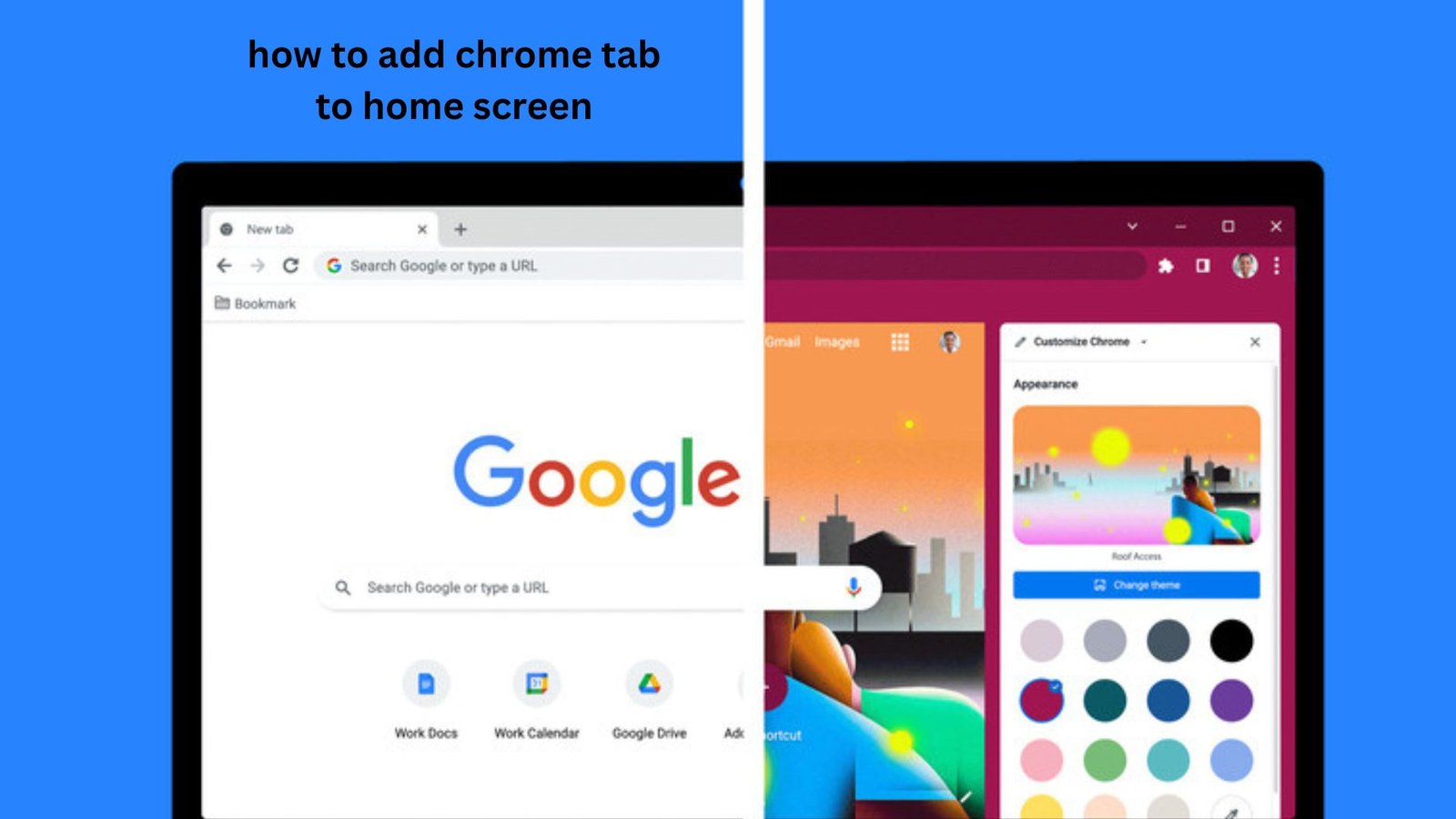
If you regularly open the same website in Chrome, digging through bookmarks, browsing history, or an already-crowded list of tabs can become surprisingly annoying. Maybe it is your online banking page, a work dashboard, a news site, a school portal, or a website you check several times a day. In situations like these, putting the page directly on your device’s home screen can save time.
If you are wondering how to add a Chrome tab to your home screen, the process is straightforward, but the exact steps depend on whether you are using Android, iPhone, iPad, Windows, Mac, or another desktop system. There is also an important distinction between creating a simple website shortcut and installing a website as a web app.
This guide explains the current Chrome methods in practical terms, including what to do when the expected option is missing, why the menu may look different on your device, and which method makes the most sense for different situations. The instructions reflect Chrome’s current help documentation and the way the browser handles website shortcuts today.
What Does “Add a Chrome Tab to Home Screen” Mean?
Technically, you are not placing the existing Chrome tab itself on your home screen. Instead, Chrome creates a shortcut to the webpage currently open in that tab.
When you tap the shortcut later, Chrome opens that website directly rather than requiring you to:
- Open Chrome.
- Search for the website.
- Find the correct bookmark.
- Navigate through several pages.
- Or search through your open tabs.
This distinction matters because the shortcut remembers the web address, not necessarily the exact temporary state of the tab.
For example, suppose you have a Chrome tab open to:
example.com/dashboard
Adding that page to your home screen creates a shortcut that points to the dashboard URL. If the site requires you to sign in, Chrome may still ask you to log in depending on your session and the website’s security settings.
How to Add a Chrome Tab to the Home Screen on Android
Android provides the most direct Chrome-specific method for creating a website shortcut.
Step-by-Step Instructions
- Open Chrome on your Android phone or tablet.
- Navigate to the website you want to save.
- Tap the three-dot menu to the right of the address bar.
- Look for Install and create shortcut.
- Tap Create shortcut.
- Change the shortcut name if you want.
- Tap Add.
Google’s current Chrome instructions use the wording “Install and create shortcut.” This is worth knowing because older tutorials often tell users to look for “Add to Home screen.” If you are following an older guide and cannot find that exact wording, the feature may simply have been renamed in your version of Chrome.
What Happens After You Tap Add?
Chrome places an icon for the website on your Android home screen.
You can then tap that icon whenever you want to return to the site.
Google also notes that shortcuts carrying the Chrome logo open through Chrome.
If You See “Install App” Instead
Do not assume something has gone wrong.
Some websites are designed as web apps, sometimes called Progressive Web Apps or PWAs. When Chrome recognizes this type of site, it may offer an Install app option rather than simply creating a basic shortcut.
A web app can provide a more app-like experience and may support features such as notifications, offline functionality, file access, or other capabilities, depending on the website.
In practical terms:
- Create shortcut = quick access to a website.
- Install app = the website may behave more like an application.
For a frequently used service, installing the web app can sometimes be the better choice.
How to Add a Chrome Tab to the Home Screen on iPhone
Chrome on iPhone has a similar feature, although the interface is different from Android.
Follow These Steps
- Open Google Chrome on your iPhone.
- Visit the webpage you want to save.
- Tap the Share button near the address bar.
- Select Add to Home Screen.
- Review or change the website name.
- Tap Add.
The website shortcut will then appear on your iPhone’s home screen. Google’s current documentation confirms that Chrome for iPhone and iPad supports creating website shortcuts this way.
A Useful iPhone Detail
If you are using an older online tutorial that says Chrome on iPhone cannot add websites to the home screen, be careful with that advice. Chrome’s current official documentation now describes Add to Home Screen directly within Chrome for iPhone and iPad.
That is one reason older troubleshooting articles can sometimes make this task more confusing than it needs to be.
How to Add a Chrome Website Shortcut on a Computer
If by “home screen” you mean your Windows or Mac desktop, Chrome provides a separate shortcut feature.
Windows and Mac
- Open Chrome.
- Go to the website you want to save.
- Click the three-dot menu in the upper-right corner.
- Select Cast, save, and share.
- Choose Create shortcut.
- Give the shortcut a name.
- Select Create.
Google’s current instructions use this menu path for creating website shortcuts on computers.
The resulting shortcut gives you a quick way to launch the website without first searching for it manually.
Want the Website to Feel More Like an App?
Chrome can also work with web apps on computers. Depending on the website, a web app can be launched separately and may provide an experience closer to a traditional application.
This is particularly useful for services you use throughout the workday, such as:
- Project management tools
- Online documents
- Communication platforms
- Accounting dashboards
- Customer-management systems
Shortcut vs Bookmark vs Open Tab: Which Is Better?
These options may sound similar, but they solve different problems.
| Method | Best for | Main advantage |
|---|---|---|
| Home-screen shortcut | Websites you use frequently | Fastest access |
| Bookmark | Websites you visit occasionally | Keeps Chrome organized |
| Open tab | Temporary tasks | Easy to return to current work |
| Web app | Frequently used supported websites | More app-like experience |
| Desktop shortcut | Regular computer use | One-click access |
A home-screen shortcut is usually the best choice when you think, “I open this website almost every day.”
A bookmark makes more sense when you only need the website occasionally.
An open tab is better when you are actively working on something and do not need permanent access to it.
One Important Limitation: A Shortcut Does Not Always Save Your Exact Tab
This is one of the most useful things to understand before creating dozens of shortcuts.
Suppose you have a shopping website open with a particular product selected. You create a home-screen shortcut while viewing that product.
The shortcut generally points to the webpage address available at the time. It does not necessarily preserve every temporary element of your browsing session.
For example, it may not preserve:
- Text you entered into a form
- An unsaved checkout process
- A temporary filter
- A popup state
- An unsaved document
- A page position
- A session that has expired
So if the page contains important unfinished work, do not treat the home-screen shortcut as a replacement for saving that work.
Why the “Add to Home Screen” Option May Be Missing
If you cannot find the option, do not immediately assume Chrome is broken.
There are several possible explanations.
1. The Menu Name Has Changed
On current Android Chrome versions, the traditional Add to Home screen wording may appear as Install and create shortcut.
This is probably the first thing to check.
2. The Website Supports Installation
If Chrome recognizes the website as a web app, you may see Install app instead.
That is not a missing feature. It can actually provide a richer result than a basic shortcut.
3. The Shortcut Already Exists
If you have previously added the same website, Chrome may not give you a useful reason to create an identical shortcut again.
Check your existing home-screen pages before troubleshooting Chrome.
4. You Are Using a Different Browser
Make sure you are actually working in Chrome.
On Android, the menu and available options can differ between Chrome, Samsung Internet, Firefox, Edge, and other browsers.
5. Your Chrome Version Is Outdated
Chrome’s interface changes over time. If instructions from an older article do not match your screen, update Chrome before spending time trying to reproduce an old menu.
What to Do If the Shortcut Does Not Appear
Sometimes the shortcut is successfully created but you cannot immediately see it.
First, swipe through your home-screen pages and check folders.
Then open your device’s app or launcher interface and look for the shortcut.
If you still cannot find it, try creating the shortcut again after confirming that Chrome is updated.
On Android, it is also worth checking whether your home-screen launcher has restrictions on adding new icons. Some phones use customized launchers that behave differently from Google’s standard Android interface.
A Better Way to Organize Home-Screen Shortcuts
Adding every frequently visited website sounds useful until your home screen becomes another form of digital clutter.
A practical approach is to create shortcuts only for websites that meet at least one of these conditions:
- You use the website several times each week.
- You need fast access during work.
- The website does not have a convenient app.
- You repeatedly search for the same page.
- The site is important enough that saving a bookmark feels too slow.
For everything else, use Chrome bookmarks.
Group Shortcuts by Purpose
Instead of creating 20 random icons, consider organizing them around your actual routine.
For example:
Work
- Calendar
- Project dashboard
Finance
- Banking
- Payment portal
- Expense system
News
- Favorite news site
- Industry publication
- Research database
This small organizational change can make the feature much more useful.
Three Less-Obvious Insights About Chrome Shortcuts
A Shortcut Is Really a URL Convenience Tool
It is tempting to think of a home-screen shortcut as a miniature copy of a Chrome tab.
It is not.
The shortcut is primarily a convenient way to launch a web address. That means its usefulness depends partly on how well the website handles URLs.
A website with clean, stable URLs is generally much easier to use through shortcuts than a site where important information exists only inside a temporary session.
A Web App Can Be Better Than a Shortcut
If Chrome offers Install app, do not automatically choose the basic shortcut.
For a service you use every day, the installed web app may provide a cleaner app-style experience. Google specifically notes that web apps can offer additional capabilities depending on the site.
This is especially useful when you want to separate a work website from your ordinary browser tabs.
Home-Screen Shortcuts Reduce Search Friction
The biggest benefit is not really the saved icon itself. It is the removal of several small decisions.
Instead of:
Open Chrome → find site → search → select result → wait
you get:
Tap icon → website
That difference may seem insignificant once. But when you repeat it multiple times every day, eliminating those steps can make a noticeable difference.
Common Mistakes to Avoid
Mistake 1: Looking for an Old Menu Name
If a guide says Add to Home screen but your Android Chrome shows Install and create shortcut, use the newer option.
Mistake 2: Confusing Chrome’s Home Page With Your Phone’s Home Screen
Chrome’s homepage is a webpage that opens when you use Chrome’s Home button. Your phone’s home screen is the operating system’s main screen.
They are completely different features. Google also distinguishes Chrome’s homepage from its startup page.
Mistake 3: Expecting the Shortcut to Preserve an Unsaved Task
A shortcut is not a backup of your current browsing session.
Save important work separately.
Mistake 4: Creating Too Many Shortcuts
If every website gets an icon, finding the right icon eventually becomes almost as inconvenient as searching in Chrome.
Use shortcuts for your genuinely high-frequency websites.
Real-World Examples
Example 1: Online Banking
You check your bank account every morning. Instead of opening Chrome and searching for the bank’s website, you create a home-screen shortcut.
One tap takes you to the login page.
Because financial websites often use strong security controls, you may still need to authenticate yourself. That is normal and should not be treated as a shortcut problem.
Example 2: Work Dashboard
You manage projects through a browser-based dashboard.
Installing it as a web app, when Chrome offers that option, may make more sense than creating a basic shortcut because you use the service continuously during the workday.
Example 3: News Website
You read the same news site every evening.
A shortcut is ideal because you want quick access but probably do not need a separate installed web application.
FAQ
How do I add a Chrome tab to my Android home screen?
Open the webpage in Chrome, tap the three-dot menu, choose Install and create shortcut, select Create shortcut, and tap Add. The exact wording can vary between Chrome versions, but Google’s current Android instructions use this menu path.
How do I add a website from Chrome to my iPhone home screen?
Open the website in Chrome on your iPhone, tap the Share button, choose Add to Home Screen, edit the name if necessary, and tap Add. The shortcut will then appear on your iPhone’s home screen.
Why does Chrome say “Install app” instead of “Add to Home Screen”?
The website may support web-app functionality. Chrome can offer an installation option when a website provides a more app-like experience, so Install app is not necessarily an error or a missing shortcut feature.
Can I add a Chrome website to my computer desktop?
Yes. On a computer, open the website in Chrome, go to More → Cast, save, and share → Create shortcut, give the shortcut a name, and select Create. Chrome will create a shortcut for quick access to the website.
Does a Chrome home-screen shortcut save my exact open tab?
No. Think of it as a shortcut to the webpage rather than a complete copy of your current tab. Temporary form data, unsaved work, session information, or other page states may not be preserved.
What should I use: a bookmark or a home-screen shortcut?
Use a home-screen shortcut when you visit a website frequently and want one-tap access. Use a bookmark when you visit it less often or want to keep your home screen uncluttered. If Chrome offers Install app and you use that website heavily, consider the web-app option instead.
Conclusion
Learning how to add a Chrome tab to your home screen is really about creating faster access to a webpage you use regularly. On Android, Chrome currently provides the Install and create shortcut route; on iPhone and iPad, you can use Share → Add to Home Screen; and on computers, Chrome provides Create shortcut through its sharing menu.
The most important thing is to choose the right method for how you actually use the site. A simple shortcut is excellent for quick access, while an installed web app can be better for services you treat like everyday applications.
Once you understand that a shortcut points to a webpage rather than preserving an entire Chrome session, the feature becomes much easier to use intelligently. Save your most important sites, keep the number of shortcuts manageable, and let Chrome handle the repetitive navigation for you.