You may be wondering, can you make distilled water at home if you need mineral-free water but do not want to buy bottles every week? Yes—you can make a small amount of distilled water at home using a simple distillation setup. The basic idea is surprisingly straightforward: heat water until it becomes steam, capture that steam, and cool it back into liquid water in a separate container. Most dissolved minerals, salts, and many other contaminants remain behind in the original water.
However, homemade distillation is not exactly the same as producing laboratory-grade or commercially packaged distilled water. The equipment, cleanliness, starting water quality, and storage method all affect the result. Distillation also does not automatically remove every possible contaminant; some volatile chemicals can travel with the steam.
This guide explains how to make distilled water at home safely, what you need, what the process actually removes, common mistakes to avoid, and when homemade distilled water is—and is not—the right choice.
What Is Distilled Water?
Distilled water is water that has gone through distillation.
The process has two main stages:
- Evaporation: Water is heated until it produces steam.
- Condensation: The steam is cooled and collected as liquid water.
Many dissolved substances do not evaporate with the water. They remain in the original container, while the condensed water contains far fewer dissolved minerals and solids.
The U.S. Environmental Protection Agency describes distillation as a treatment process that heats water to its boiling point, generates water vapor, and then collects that vapor separately as it condenses.
This is different from simply boiling water.
Is boiled water the same as distilled water?
No.
Boiling can kill many disease-causing microorganisms, but it does not remove most dissolved minerals, salts, or other nonvolatile contaminants. Distillation physically separates water vapor from much of what was dissolved in the original water.
That distinction matters if your goal is low-mineral water rather than simply safer water.
Can You Make Distilled Water at Home?
Yes. A basic homemade setup can produce distilled water from ordinary tap water.
You need:
- A large cooking pot with a lid
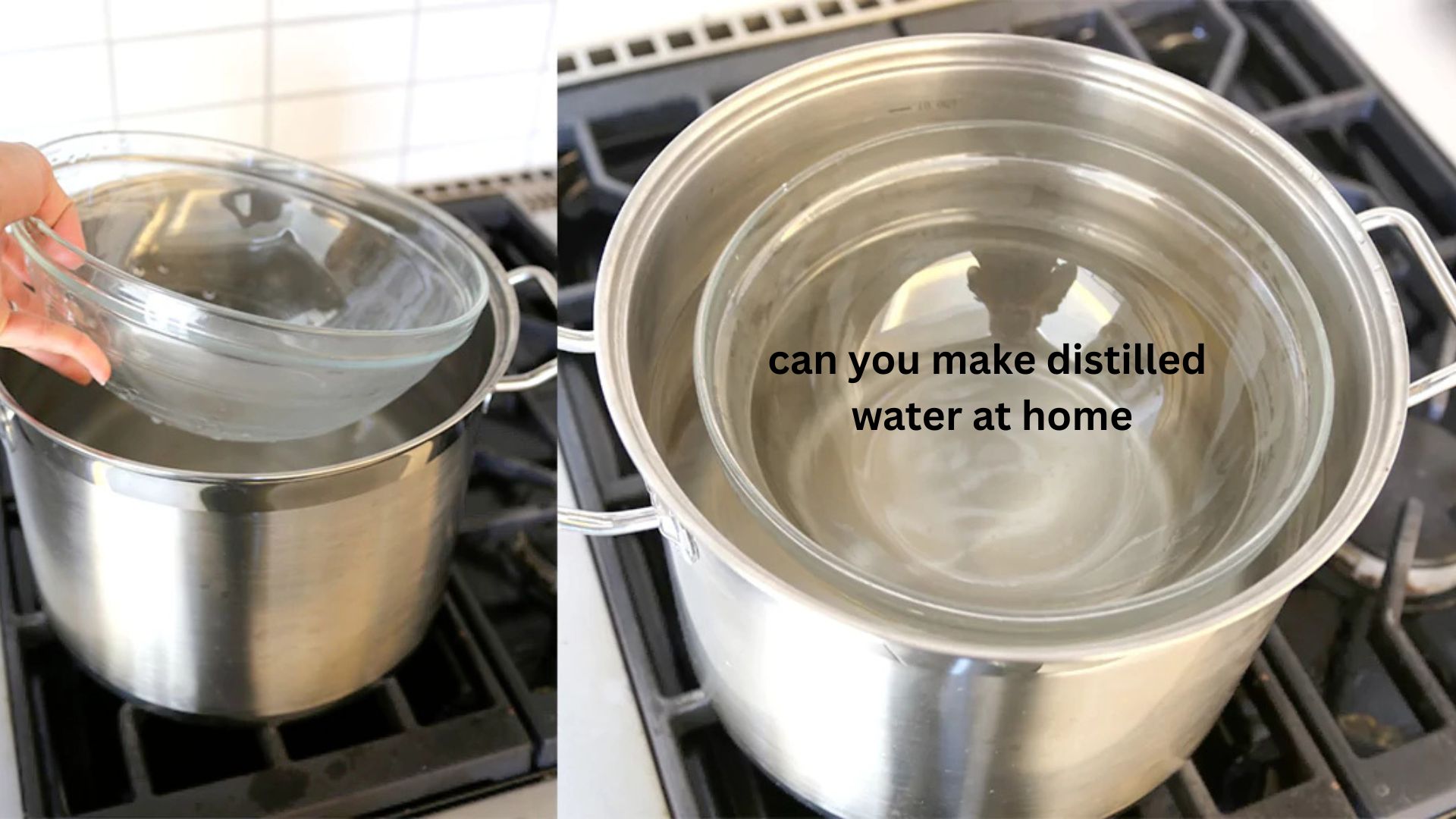
- A smaller heat-resistant bowl or container
- A small rack or heat-resistant stand
- Ice
- Clean water
- A clean container for storing the finished water
The smaller container should sit inside the pot without floating or tipping, and it should be positioned so that condensed water from the lid can drip into it.
The important principle is to keep the collection container separated from the original water.
How to Make Distilled Water at Home
Here is a practical stovetop method.
1. Clean everything first
Wash the pot, lid, collection container, and rack thoroughly.
This step is easy to overlook. Distillation can greatly reduce contaminants in the source water, but dirty equipment can reintroduce contamination afterward.
Allow the equipment to dry or use it immediately after cleaning.
2. Put the rack inside the pot
Place a heat-resistant rack or stand at the bottom of the pot.
The purpose is to keep the collection bowl above the water level.
If you do not have a suitable rack, do not improvise with a material that could melt, crack, or release chemicals when heated.
3. Add water to the pot
Pour water into the large pot, but keep the level below the top of the rack.
The water should surround the collection container without flowing into it.
For a first attempt, using a relatively small quantity is easier to control than filling a large pot.
4. Place the collection container inside
Put your clean heat-resistant bowl on the rack.
Make sure it is stable.
You do not want the container moving around while the water is heating.
5. Put the lid on upside down
Place the lid on the pot with its handle facing downward, toward the collection bowl.
As the water produces steam, the steam rises and contacts the cooler lid. The resulting droplets can then run toward the center of the inverted lid and fall into the collection container.
This is the part that turns ordinary boiling into a simple distillation process.
6. Add ice to the top of the lid
Put ice on the outside surface of the inverted lid.
The colder surface encourages the steam underneath to condense more quickly.
As the ice melts, replace it when necessary.
7. Heat the water gently
Bring the water to a controlled simmer or gentle boil.
Avoid excessively aggressive boiling.
A violent boil can cause ordinary water droplets to splash into the collection container, reducing the quality of the distilled water.
8. Collect the condensed water
Steam will rise, condense against the cooler lid, and drip into the bowl.
This collected water is your homemade distilled water.
When you have enough, turn off the heat and allow the equipment to cool before handling it.
9. Store it properly
Transfer the distilled water into a clean, food-safe container with a tight-fitting lid.
Label the container with the date if you are not going to use it immediately.
The water may have very few dissolved minerals, but it is not magically protected from contamination after distillation. Clean handling and storage still matter.
What Does Home Distillation Remove?
Distillation is particularly useful because many contaminants do not travel with water vapor.
According to the CDC, household distillation can provide very high removal of bacteria, viruses, and protozoa and can reduce many common chemical contaminants, including several heavy metals and dissolved substances.
It can substantially reduce:
- Calcium and magnesium
- Many dissolved salts
- Sodium
- Nitrate
- Sulfate
- Some heavy metals
- Many microorganisms
- Many other dissolved solids
This is one reason distilled water is useful for applications where mineral deposits are undesirable.
For example, the EPA notes that distillation is particularly effective at reducing mineral content in water used with household humidifiers.
What Does Distillation Not Remove?
This is one of the most important details when making distilled water at home.
Distillation is not a universal contaminant-removal method.
Some volatile organic compounds, solvents, and certain pesticides can potentially evaporate along with water and make their way into the condensed water. The EPA specifically lists some volatile organic compounds, pesticides, and volatile solvents among the limitations of distillation.
That means you should not assume that distilling heavily contaminated water makes it safe.
Never use questionable water simply because you can boil it
If your source water may contain fuel, industrial chemicals, solvents, pesticides, or other toxic substances, homemade distillation should not be treated as a guaranteed rescue method.
The CDC makes the same broader point about emergency water treatment: water contaminated with harmful chemicals or toxins may not become safe through boiling, disinfecting, or ordinary filtering.
If you suspect chemical contamination, use a known safe water source or obtain appropriate testing and professional advice.
Distilled Water vs. Boiled Water vs. Filtered Water
These three are often confused, but they serve different purposes.
| Type | Main purpose | Removes minerals? | Kills microorganisms? |
|---|---|---|---|
| Boiled water | Microbial safety | No | Yes, when properly boiled |
| Filtered water | Reduce selected contaminants | Depends on filter | Depends on filter |
| Distilled water | Reduce dissolved solids and many contaminants | Yes, substantially | Yes, through the distillation process |
The right choice depends on your actual problem.
If you simply need water that has been treated against germs, boiling may be more practical. CDC guidance identifies boiling as a reliable way to kill disease-causing organisms.
If you specifically need low-mineral water, distillation makes more sense.
A Useful Insight: Distillation Is About Separation, Not Just Purification
A common misunderstanding is that distillation somehow “cleans” water in the same way soap cleans a dirty surface.
It is better understood as separation.
Imagine a pot containing water, salt, minerals, and other dissolved substances. When water changes into vapor, many of those dissolved substances remain in the pot. You then capture the vapor and turn it back into liquid.
That is why the water left behind can become increasingly concentrated in whatever did not evaporate.
This also explains why repeatedly distilling the same contaminated source does not necessarily solve every contamination problem. The method depends on the physical properties of the substances involved.
Three Practical Insights People Often Miss
1. The first drops are not necessarily your best-quality water
In a homemade setup, condensation can initially occur on surfaces that were exposed to air, residue, or cleaning products.
For that reason, careful cleaning and a controlled setup are more important than simply collecting every drop that appears.
2. The collection container matters more than people think
If you use a container that is not designed for heat, it may crack, deform, or release unwanted substances.
A clean, heat-resistant, food-safe container is a much better choice.
3. Storage can undo good purification
Freshly distilled water can be relatively low in contaminants, but once it is transferred into a dirty bottle or repeatedly opened, contamination can be introduced again.
The purification process ends when collection ends. Safe storage is a separate step.
Common Mistakes When Making Distilled Water
Using an unstable container
A bowl that can tip into the boiling water defeats the purpose of the setup and creates a burn hazard.
Boiling too aggressively
Excessive bubbling can cause source water to splash into the collection container.
Gentler heating gives you better control.
Using questionable source water
Distillation should not be viewed as a guaranteed treatment for chemically contaminated water.
Touching the collected water unnecessarily
Clean hands and clean equipment help prevent recontamination.
Leaving the water uncovered
Once collected, keep it in a clean, closed container.
Expecting instant results
Homemade distillation is relatively slow compared with simply boiling a pot of water. You are deliberately collecting condensed vapor rather than consuming the original water.
How Much Distilled Water Can You Make?
The amount depends on the size of your pot, heating power, cooling efficiency, and how long you run the process.
You will not recover every drop of the starting water.
Some water remains in the pot because it contains the concentrated substances that were left behind. Some water is also lost as steam or during handling.
For that reason, home distillation is generally more suitable for producing small batches than for supplying a household’s entire drinking-water needs.
If you regularly need large amounts of distilled water, a purpose-built home distiller may be more practical and easier to clean consistently.
Can You Drink Homemade Distilled Water?
For most healthy adults, properly prepared distilled water can be used as drinking water, provided the source water and equipment are appropriate and the finished water is handled hygienically.
However, distilled water contains very little mineral content. That does not mean it is automatically “healthier” than ordinary safe drinking water.
For everyday hydration, safe municipal or appropriately tested drinking water is usually sufficient. Distillation is mainly valuable when you have a specific reason to reduce dissolved minerals or particular contaminants.
If you have a medical or dietary reason for using a particular type of water, follow the advice of your healthcare professional rather than assuming distilled water is the best option.
When Should You Buy Distilled Water Instead?
Buying commercially produced distilled water can make more sense when you need:
- A consistent product
- Large quantities
- Water for equipment with strict water-quality requirements
- Convenient sealed storage
- Less maintenance and cleanup
Commercial systems also provide controlled processing and packaging that are difficult to reproduce perfectly with a saucepan and household equipment.
For something like an occasional humidifier refill, however, home production may be reasonable if you understand the limitations and can maintain a clean process.
FAQ
Can you make distilled water at home without a distiller?
Yes. You can create a simple stovetop distillation system using a pot, heat-resistant collection container, rack, inverted lid, and ice. The water is heated to create steam, which then condenses on the cooler lid and collects separately. The process is slower than using a dedicated distiller, but the underlying principle is the same.
How do you make distilled water from tap water at home?
Place a heat-resistant collection bowl on a rack inside a pot containing tap water, keeping the bowl above the water level. Cover the pot with an inverted lid and place ice on top of the lid to encourage condensation. Heat the water gently, collect the condensed water, and store it in a clean, covered container.
Is homemade distilled water really distilled?
If water vapor is produced and then separately condensed and collected, you are performing distillation. However, the purity of the final product depends on the equipment, source water, temperature control, cleanliness, and storage. Homemade distilled water should therefore not automatically be assumed to meet laboratory or pharmaceutical-grade specifications.
Does boiling water make it distilled?
No. Boiling and distillation are different processes. Boiling can kill many microorganisms, but dissolved minerals and salts generally remain in the water. Distillation requires collecting and condensing the steam separately.
Can distilled water remove heavy metals?
Distillation can substantially reduce many heavy metals and other dissolved contaminants. The EPA and CDC both recognize distillation as a treatment method capable of reducing numerous common chemical contaminants. However, performance depends on the contaminant and the actual system, so heavily contaminated water should not be assumed safe simply because it has been boiled and condensed.
How long does homemade distilled water last?
There is no single universal shelf-life for homemade distilled water because storage conditions and container cleanliness vary. Store it in a clean, sealed container away from contamination and use it promptly rather than treating it as indefinitely sterile. Distilled water can become contaminated after purification through handling, packaging, or storage.
Final Takeaway
So, can you make distilled water at home? Absolutely. The basic process is simple: heat water, capture the steam, condense it, and collect the resulting water separately.
The important part is understanding what the process can—and cannot—do. Distillation is excellent at reducing minerals, dissolved solids, microorganisms, and many contaminants, but it is not a universal solution for every chemical pollutant.
For a small household quantity, a carefully prepared stovetop setup can work. Use clean equipment, gentle heating, a stable collection container, and hygienic storage. If the original water is suspected of chemical contamination, however, don’t rely on a homemade distillation setup as your only safety measure.
In other words, making distilled water at home is less about finding a clever kitchen trick and more about understanding the science of separation—and knowing when that science is appropriate for the water problem you actually have.