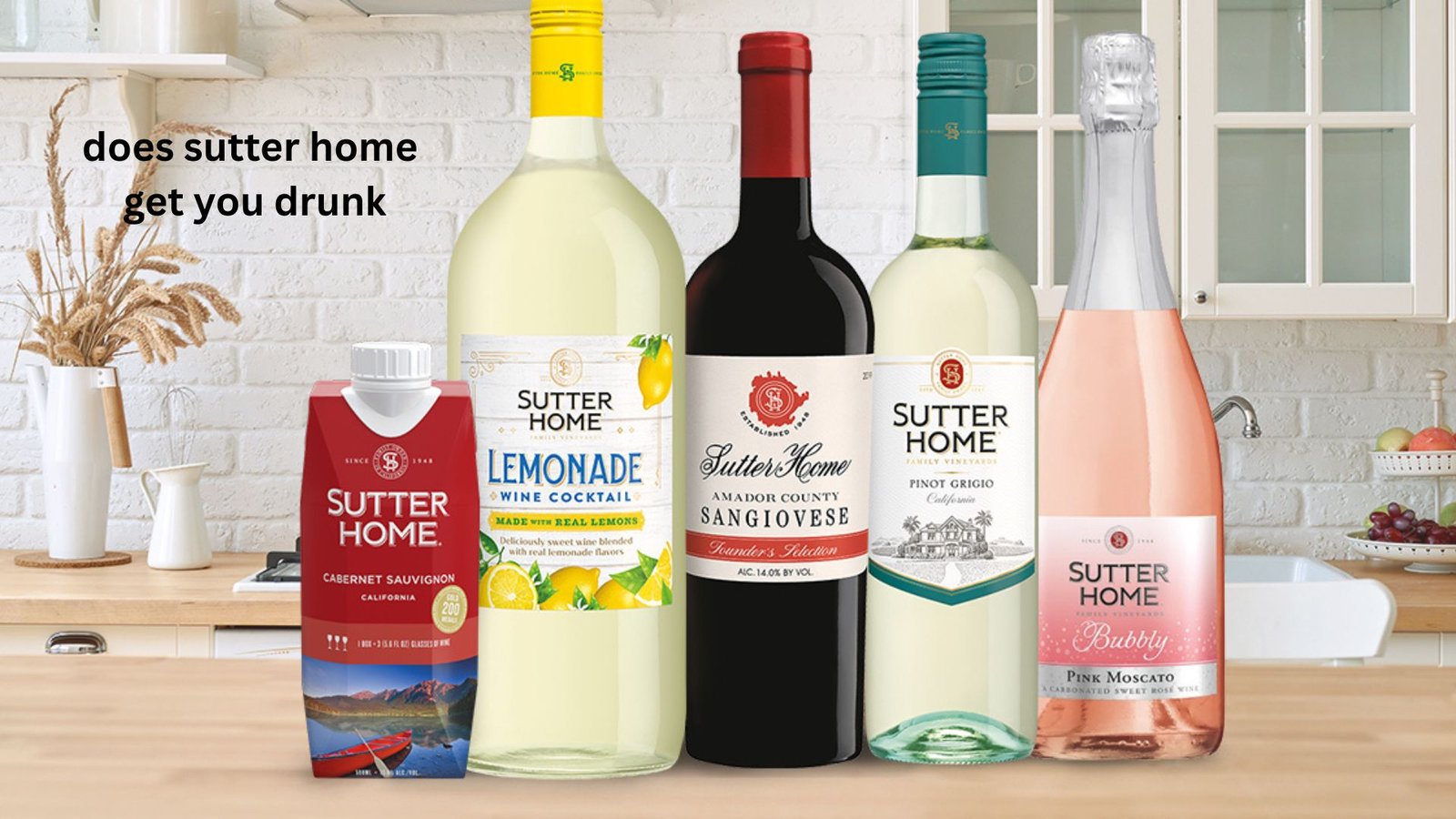
If you are wondering does Sutter Home get you drunk, the short answer is yes—it can. Sutter Home is a wine brand, and many of its regular wines contain enough alcohol to cause intoxication, depending on how much you drink, how quickly you drink it, and your body’s response to alcohol. The important detail is that Sutter Home is not one single drink with one alcohol percentage. Its products range from lower-alcohol wine cocktails and fruit infusions to traditional wines around the 12–14% alcohol-by-volume (ABV) range.
That difference matters if you are holding a small bottle and trying to judge how strong it really is. A 187 mL bottle of a 13% wine, for example, contains considerably more alcohol than the same-size serving of a 7.5% wine cocktail.
This guide explains how strong Sutter Home wines are, how much alcohol is in common serving sizes, why sweet wines can feel deceptively easy to drink, and what factors determine whether you actually become drunk.
Yes, Sutter Home Can Make You Drunk
Sutter Home wines contain ethanol, the same type of alcohol responsible for intoxication in beer, wine, and spirits.
For example, Sutter Home Sweet Red lists 12.15% alcohol by volume, while some Sutter Home wines are around 13% or higher. A Sutter Home Red Blend sold in a 187 mL bottle is listed at 13.8% ABV.
So although Sutter Home may taste smooth, fruity, or sweet, it is still alcoholic wine.
The key point is:
Taste does not determine how intoxicating a drink is. Alcohol content and the amount consumed matter much more.
Someone who rarely drinks may notice alcohol’s effects after a relatively small amount, while a person with greater tolerance may feel fewer obvious effects despite having consumed the same quantity.
How Strong Is Sutter Home Wine?
The answer depends on the particular Sutter Home product.
The brand’s current range includes traditional red and white wines, sweet wines, Moscato varieties, Rosé, Sangria, wine cocktails, and fruit-infused products.
Some examples illustrate the difference:
| Sutter Home product | Approx. ABV |
|---|---|
| Sweet Red | 12.15% |
| Chardonnay | 13.1% |
| Red Blend | 13.8% |
| Fruit Infusions | 7.5% |
| Lemonade Wine Cocktail | 7.5% |
The 7.5% figure for Fruit Infusions and Lemonade Wine Cocktail comes directly from Sutter Home’s product information.
That means you should check the ABV on the specific bottle rather than assuming every Sutter Home product has the same strength.
Why the bottle size matters
ABV tells you the concentration of alcohol, but the actual amount consumed depends on volume.
A 187 mL mini bottle containing wine at approximately 13% ABV is not equivalent to drinking only a few sips from a 750 mL bottle. The mini bottle is small, but it still contains a meaningful amount of alcohol.
This is one reason people sometimes underestimate wine: the container can look small even though the alcohol adds up quickly.
Can One Sutter Home Bottle Get You Drunk?
It can, particularly if you drink the bottle quickly or have a low tolerance.
But there is no reliable rule saying that one bottle = drunk. Alcohol affects people differently.
Your response can depend on:
- Body size
- Biological sex
- Whether you have eaten
- Drinking speed
- Alcohol tolerance
- Medications or other substances
- Liver metabolism
- Individual sensitivity to alcohol
- The wine’s actual ABV
A person drinking a 187 mL bottle slowly with food may experience a very different effect from someone drinking the same amount quickly on an empty stomach.
What about a full 750 mL bottle?
A standard 750 mL bottle of wine can contain a substantial amount of alcohol.
At roughly 13% ABV, the bottle contains about 97.5 mL of pure ethanol before accounting for normal differences in the actual ABV.
That is why finishing an entire bottle should not be treated as equivalent to casually having one glass.
Sutter Home itself uses 5 oz servings for its nutrition information and identifies five such servings in a 750 mL container.
Why Sweet Sutter Home Wines Can Feel Stronger Than Expected
One of the less obvious issues with sweet wine is that sweetness can make alcohol easier to consume.
A sweet wine may taste more like fruit juice than a traditional dry wine. That can encourage someone to drink faster or pour a larger serving without noticing how much alcohol they are consuming.
Sutter Home’s product range includes sweet wines such as Sweet Red, Moscato varieties, and fruit-infused wines.
This creates a practical trap:
Easy to drink does not mean low in alcohol.
For instance, Sutter Home Sweet Red is 12.15% ABV, despite its sweet and fruity flavor profile.
That’s quite different from assuming that a sweet wine is automatically similar to a soft drink or low-alcohol beverage.
How Quickly Can Sutter Home Affect You?
Alcohol generally begins entering the bloodstream relatively quickly, but the noticeable effects depend heavily on the circumstances.
Drinking rapidly tends to produce stronger effects than consuming the same amount over a longer period because the body has less time to process the alcohol while you are still drinking.
You may initially notice:
- Warmth or relaxation
- Increased talkativeness
- Reduced inhibitions
- Less precise judgment
- Poorer coordination
- Slower reaction time
- Increasingly impaired decision-making
Importantly, feeling normal does not necessarily mean you are unimpaired.
Alcohol can affect judgment and reaction speed before someone feels obviously drunk.
A Real-World Example
Imagine two people each have a glass of Sutter Home wine.
Person A drinks slowly with a meal over an hour.
Person B drinks the same amount quickly without eating.
They have consumed the same wine, but their experiences may be very different.
Person B may notice alcohol effects sooner because drinking speed and food intake influence how alcohol is absorbed.
Now imagine that Person B continues drinking because the wine tastes sweet and easy to consume. The amount of alcohol in the body can continue increasing even after the person realizes they are becoming intoxicated.
That’s why focusing only on the taste of a wine can be misleading.
Does Sutter Home Get You Drunk Faster Than Beer?
Not necessarily.
The important comparison is the amount of pure alcohol, rather than simply whether the beverage is wine or beer.
A typical glass of wine may contain a similar amount of alcohol to a typical serving of beer, although serving sizes and ABV vary substantially.
For example, a 5 oz serving of wine at around 12% ABV contains roughly the same order of alcohol as a standard serving of beer around 5% ABV.
But actual drinks vary.
A strong beer, large wine pour, cocktail, or large glass of Sutter Home can contain considerably more alcohol than someone expects.
The serving size is the hidden variable
A restaurant might pour substantially more than 5 oz into a wine glass.
Likewise, at home, someone may fill a glass generously without measuring it.
That means saying “I only had two glasses” doesn’t necessarily tell you how much alcohol was consumed.
Two small pours and two very large pours can be dramatically different.
Does Sutter Home Make You Drunk If You Have a Low Tolerance?
It can.
People with low alcohol tolerance may notice effects sooner, but tolerance should never be used as a safety test.
Feeling less drunk does not mean your blood alcohol concentration is low.
Someone who regularly drinks may become accustomed to the subjective feeling of alcohol while still experiencing impaired coordination, reaction time, and judgment.
So “I don’t feel drunk” is not a reliable indicator that it is safe to drive.
Why You Shouldn’t Use How You Feel to Decide Whether to Drive
This is one of the most important practical points.
Alcohol can impair driving ability before obvious drunkenness develops. If you have consumed Sutter Home or any other alcoholic beverage, don’t try to calculate whether you’re “okay enough” to drive based solely on how you feel.
The safest choice is to arrange a sober driver, use a taxi or rideshare, or otherwise avoid driving after drinking.
There is also no reliable home trick that instantly removes alcohol from your bloodstream. Coffee, cold showers, food, or fresh air may change how you feel, but they do not magically eliminate alcohol.
Common Mistakes People Make With Sutter Home
1. Assuming sweet means weak
This is probably the biggest misconception.
Sweetness describes taste—not necessarily alcohol strength. Sutter Home Sweet Red, for example, is listed at 12.15% ABV.
2. Ignoring the ABV
Different Sutter Home products have different alcohol levels.
Always check the bottle.
3. Treating a mini bottle as “just a little”
A 187 mL bottle is smaller than a standard 750 mL bottle, but it can still contain enough alcohol to cause noticeable impairment.
4. Drinking quickly
Speed matters. Finishing alcohol rapidly can produce stronger effects than spacing the same amount over a longer period.
5. Mixing alcohol with other substances
Combining alcohol with sedating medications, recreational drugs, or other substances can create unpredictable and potentially dangerous effects.
If you are taking medication, check with a healthcare professional or pharmacist rather than assuming the combination is safe.
What Should You Do If You Think You’ve Had Too Much?
Stop drinking.
Do not drive, operate machinery, or put yourself in a situation where impaired judgment could cause harm.
If someone becomes difficult to wake, has slow or irregular breathing, repeatedly vomits, has a seizure, becomes severely confused, or loses consciousness, treat it as a medical emergency and seek emergency medical help immediately.
Do not assume that someone can simply “sleep it off” if they are showing signs of severe alcohol poisoning.
A Better Way to Think About Sutter Home Alcohol
Instead of asking only, “Will this wine get me drunk?”, ask three questions:
What is the ABV?
Check the label because different Sutter Home products have different strengths.
How much am I actually drinking?
A glass, 187 mL bottle, and 750 mL bottle represent very different quantities.
How quickly am I drinking it?
Fast consumption can make alcohol effects build more quickly.
This approach gives you a much better understanding of what you are actually consuming than judging the wine by sweetness or flavor.
FAQ
Does Sutter Home wine get you drunk?
Yes. Sutter Home produces alcoholic wines that can cause intoxication. Many of its traditional wines contain roughly 12–14% ABV, although some products, such as its Fruit Infusions and Lemonade Wine Cocktail, are listed at 7.5% ABV.
How much Sutter Home does it take to get drunk?
There is no universal amount because alcohol affects people differently. Body size, food intake, drinking speed, tolerance, medications, and the wine’s ABV all matter. A person with low tolerance may feel significant effects from an amount that another person barely notices.
Can one small bottle of Sutter Home get you drunk?
It can cause noticeable intoxication, depending on the specific product and the person drinking it. Sutter Home sells 187 mL bottles, and some traditional wines in that size are around 13% ABV.
Is Sutter Home a strong wine?
Some Sutter Home wines are within the typical strength range for table wine rather than being unusually high-alcohol beverages. For example, Sweet Red is 12.15% ABV and one Red Blend is listed at 13.8%. However, the brand also sells lower-ABV wine cocktails and fruit-infused products.
Does sweet Sutter Home wine have less alcohol?
Not necessarily. Sweetness and alcohol percentage are separate characteristics. Sutter Home Sweet Red, for example, is sweet but contains 12.15% ABV, while some of the brand’s sweeter fruit-infused products are 7.5% ABV.
Can you drive after drinking Sutter Home?
You should not decide whether you can drive based on whether you feel drunk. Alcohol can impair reaction time and judgment before you notice obvious symptoms. If you’ve been drinking, the safest option is not to drive.
Conclusion
So, does Sutter Home get you drunk? Yes, it can. The important factor is not the brand name but the combination of alcohol percentage, serving size, drinking speed, and your individual response to alcohol.
Sutter Home’s traditional wines can contain around 12–14% ABV, while some of its wine cocktails and fruit-infused products contain less. Sweet or fruity flavor can make a drink seem lighter than it really is, so checking the ABV and paying attention to serving size is much more useful than judging strength by taste.
If you’re unsure about a particular Sutter Home bottle, check its label for the ABV before drinking. And if you’ve already had enough to feel impaired, stop drinking and don’t drive.