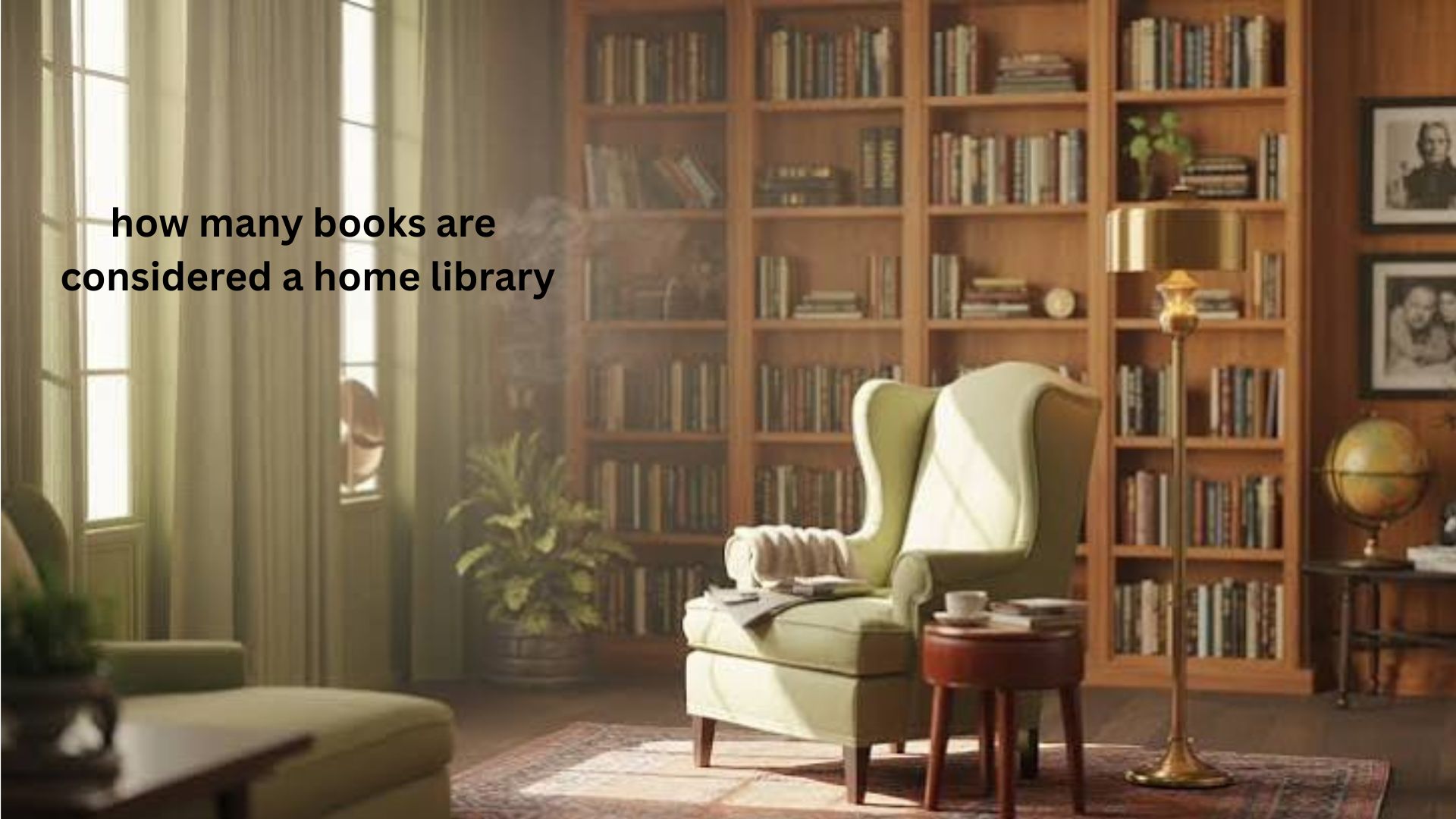
Walking into a room filled with books can feel completely different from seeing a few shelves with novels and magazines. Many people wonder how many books are considered a home library because they want to know whether their collection is large enough to deserve that name. Is 50 books enough? Do you need hundreds? Or does a home library depend more on how you use your books than the number you own?
The truth is that there is no official minimum number of books required to create a home library. A personal library can begin with a small, carefully chosen collection and grow over time. For some people, 50 meaningful books represent years of learning, while others may have thousands collected from different interests and experiences.
This guide explains what truly defines a home library, common book collection sizes, how to build one practically, and what separates a simple bookshelf from a personal knowledge space. Whether you are starting your first collection or organizing hundreds of books, this article will help you understand what makes a home library valuable.
What Is Considered a Home Library?
A home library is a personal collection of books organized in a dedicated space for reading, learning, research, entertainment, or preserving knowledge. Unlike a random pile of books around the house, a home library usually reflects the owner’s interests, habits, and personal history.
There is no universal rule about the number of books needed. A person with 30 carefully selected books in a reading corner may have a more meaningful home library than someone with 500 untouched books stored in boxes.
A home library is usually defined by three main factors:
- A purposeful collection: The books serve a reason, such as education, hobbies, professional knowledge, or enjoyment.
- Organization: Books are arranged in a way that makes them easy to find and use.
- Personal connection: The collection represents the owner’s interests and experiences.
The number of books matters, but it is only one part of the definition.
How Many Books Are Considered a Home Library?
Most people consider a collection of around 100 books or more to be a traditional home library. However, this is not a strict requirement.
Here is a practical way to understand different collection sizes:
1–50 Books: A Beginning Personal Library
A collection under 50 books is often considered the foundation of a home library. Many readers start here with favorite novels, reference books, cookbooks, or professional materials.
A small library can still be highly valuable. For example, a person who owns 40 books about gardening, history, and cooking may have a more focused collection than someone with hundreds of unrelated titles.
A small home library works well for:
- Apartment residents with limited space
- Casual readers
- Families building a collection slowly
- People who prefer quality over quantity
50–200 Books: A Recognizable Home Library
Many households reach this level naturally over several years. At this point, books often begin to occupy multiple shelves or a dedicated bookcase.
A collection of 100–200 books is large enough to create the feeling of a personal library. It usually includes different categories such as fiction, nonfiction, hobbies, biographies, and educational materials.
This size offers a good balance because:
- The collection feels substantial
- Books remain easy to organize
- Most titles can still be remembered and accessed
- The owner can maintain a personal connection with each book
200–1,000 Books: An Established Home Library
A collection between 200 and 1,000 books is commonly viewed as a serious home library. At this stage, organization becomes more important because finding specific books can become challenging.
Many researchers, writers, teachers, and lifelong learners have collections in this range.
A larger home library often includes:
- Subject-based sections
- Reference materials
- Favorite authors
- Professional resources
- Rare or older editions
One interesting observation from experienced book collectors is that after a certain point, adding more books does not automatically improve a library. A well-organized collection of 300 useful books can often be more valuable than a chaotic collection of 2,000 books.
1,000+ Books: A Large Personal Library
Collections with more than 1,000 books are usually considered extensive home libraries. They may require an entire room or multiple rooms.
At this size, many owners create systems similar to small private archives:
- Cataloging books digitally
- Creating sections by subject
- Tracking borrowed books
- Protecting older editions
- Regularly reviewing the collection
Large libraries often represent decades of collecting and personal intellectual growth.
Does the Number of Books Matter More Than the Purpose?
One of the biggest misunderstandings about home libraries is focusing only on quantity. A library is not valuable because it has thousands of books; it is valuable because the books are used.
A person with 75 books that they regularly read, discuss, and reference may have a richer library experience than someone with 3,000 books that remain untouched.
A meaningful home library answers questions like:
- Do these books represent my interests?
- Do I return to them for knowledge or enjoyment?
- Can I easily find what I need?
- Does this collection encourage learning?
The purpose behind the collection matters more than the exact number.
How Many Books Do You Need for a Small Home Library?
For most homes, a small but functional library can begin with 50 to 100 books. This amount is enough to create a dedicated reading area without overwhelming your living space.
A practical starter home library might include:
- 20 favorite fiction books
- 20 nonfiction or educational books
- 10 reference or hobby-related books
- 10 personal favorites or meaningful gifts
The best starting point is not buying books simply to reach a number. Instead, collect books that you genuinely want to read or keep.
How to Build a Home Library That Feels Personal
Creating a home library is not only about collecting books. It is about designing a space that encourages curiosity.
1. Choose Books With Personal Meaning
Many experienced readers recommend avoiding the habit of buying books just because they look impressive on a shelf.
A better approach is to collect books connected to:
- Your career
- Your hobbies
- Your personal goals
- Important moments in your life
- Subjects you want to understand better
The strongest libraries often tell a story about the person who built them.
2. Organize Books Based on How You Use Them
Traditional alphabetical organization is not always the most practical choice.
Many home libraries work better when organized by:
- Subject
- Reading priority
- Personal importance
- Frequency of use
For example, keeping frequently used cooking books near the kitchen or business books near a workspace can make your library more functional.
3. Leave Space for Future Growth
A common mistake is filling every shelf immediately. Experienced collectors often suggest leaving around 20–30% empty space because collections naturally grow.
An overcrowded shelf makes books harder to find and can reduce the enjoyment of the library.
4. Remove Books That No Longer Serve You
A home library does not need to keep every book forever. Regularly reviewing your collection helps maintain quality.
Consider donating or passing along books that:
- You will never read again
- No longer match your interests
- Are outdated and unnecessary
- Take valuable space away from more useful books
A carefully selected library becomes more valuable over time.
Common Mistakes People Make When Creating a Home Library
Building a personal library can be exciting, but some mistakes can reduce its usefulness.
Collecting More Than You Can Manage
Buying hundreds of books quickly can create storage problems. A library should support your life, not become a burden.
Ignoring Organization
Without a simple system, even a medium-sized collection can become difficult to use.
Choosing Books Only for Appearance
A beautiful bookshelf is enjoyable, but a meaningful collection is better than a decorative one.
Forgetting Digital and Practical Needs
Some readers combine physical books with digital tools, notes, or catalogs to manage larger collections efficiently.
Unique Perspective: A Home Library Is a Record of Your Thinking
A home library is often viewed as a display of knowledge, but it can also be considered a record of personal growth.
The books someone owns reveal:
- Questions they have explored
- Skills they wanted to develop
- Ideas that influenced them
- Experiences they valued
In this way, even a small collection can become a personal archive.
Another overlooked point is that a home library changes over time. The best libraries are not finished collections; they are living spaces that grow and adapt as the owner’s interests change.
FAQ
How many books do you need to call it a home library?
There is no official number required to call a collection a home library. Many people consider 50 to 100 books enough for a small personal library, while larger collections may contain hundreds or thousands. The organization and purpose of the collection matter more than the exact number.
Is 100 books considered a home library?
Yes, a collection of 100 books is commonly considered a home library by many readers. At this size, most people have enough books to create a dedicated shelf or reading area. A carefully chosen collection of 100 books can be more meaningful than a larger but unused collection.
How many books does the average home library have?
The size of home libraries varies greatly depending on lifestyle, interests, and available space. Many households have collections ranging from a few dozen books to several hundred. People who read professionally or collect specific subjects often have much larger libraries.
Can a small bookshelf be considered a home library?
Yes, a small bookshelf can be considered a home library if the books are intentionally collected and used. A library is defined by purpose and personal value, not only by size. Even a single shelf can serve as a meaningful reading space.
What is the difference between a book collection and a home library?
A book collection is simply a group of books owned by someone, while a home library is usually organized and created with intention. A home library often reflects the owner’s interests and provides easy access to knowledge, entertainment, or research materials.
Conclusion
So, how many books are considered a home library? The answer depends less on a specific number and more on the purpose behind the collection. A home library can begin with 50 carefully selected books, become more established around 100–200 books, and grow into a large personal archive with thousands of titles.
The most valuable libraries are not always the biggest ones. They are the collections that inspire reading, support learning, preserve memories, and reflect the person who created them.
Whether you have one shelf or an entire room, a home library is ultimately a space where ideas live and continue to influence your everyday life.